Summer of 2023: Dance with the Dragon Queen

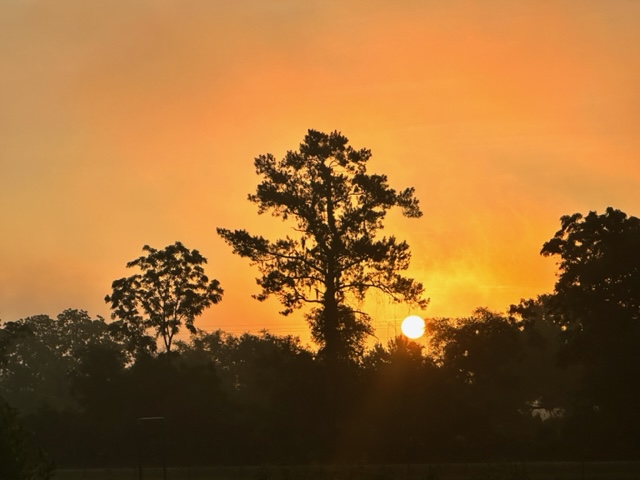
            Summer isn’t a season in the Deep South, but rather it is a condition, a state of being, or a prison sentence. Unlike any other time of year, Summer becomes omnipresent at all times of the day. She has minions, this one does, this Dragon Queen of Heat. It’s not just the mercury being forced higher into the thermometer, oh no, were it only that simple. Summer is an assault on many fronts of the human senses and psyche.

            Any rain that accidentally falls, does so in sheets, in volumes, and it does so quickly, as if the clouds have only a specific time allotted to them by the Queen. Quickly, the heat turns rain back into clouds of humidity that are dense and suffocating.

            One of my pet theories regarding Summer and the South is the citizenry scores so low in nearly every educational category is for four months of the year, they are in a state of half drowning in humidity. If this causes any permanent brain damage has never been tested, but it would explain a few things.

            But humidity is a condition, not an entity. The Dragon Queen brings the scorching heat and billions of gnats, mosquitoes, biting flies, and all manner of creeping, crawling, and flying insects. No step is taken outside without an entourage of misery. Human eyes, ears, and noses are fair game for these peddlers of pain. Gnats, whose function is unknown to science, fly directly into the eye, and it’s painful to remove them. Mosquitoes alight on exposed skin, demand a blood donation and leave welts as payment. The biting flies are kamikazes, diving down to rend flesh and leave swelling wounds. Only poisons, like diethyltoluamide, create a barrier between the minions of the Dragon Queen and anemia. But this, too, is part of her world. Insect repellent is the cologne we wear to appease the Queen.

            Yet the Dragon cannot concern herself with individuals. She must bring excess to her domain. Ponds explode with algae and water plants even as they dry up. Land vegetation grows overnight to require mowing or pruning. Gardens quickly produce, but fruit rots if not promptly harvested. Summer demands the world slows down but quickens the growth of all things green. Trees soak up sunlight like solar addicts. The woods thicken to the point of blocking the sun, creating a dark green globe of vegetation and shadows, each plant at war with all others for every photon.

            Humans hide from the Dragon Queen of Summer. Safely secured in cars or their homes, air conditioning prevents any experience with the real world. Binge-watching, video games, and social media become electronic refugee camps for those who can or will not face the Queen.

            I am part reptile, part lunatic, and fully cognizant of whose realm I trespass. Walking in the day’s heat brings her wrath upon me, and working in the compost pile irritates the Queen with my presence, but who are you? Would you cower behind your ceiling fans, their blades protecting you, as the world turns outside your drawn shades, blocking the sun’s assault? I breathe the Dragon’s Breath and feel her power, absorb the heat, and I become one with it. The path around the fenceline is cleared with a bush hook and with sweat and done in full view of the sun. Wide brim hat, long sleeves, work boots, and the desire to experience Summer, in all her glory, compel me to tempt the Dragon to kill me.

            The Queen loves no human. She will leave me dead in the woods without a thought towards life. If I choose to dance with her, then it is up to me to survive the music played. Yet for decades, I have done this, walked into the heat, flexed muscle, bled sweat and swam in the river Styx. It is only hell if you choose to be unhappy. Misery is a state of mind. If you want to, if you set the conditions of your life to do so, you can walk inside the breath of the Dragon Queen, embrace the world she has created, and live to write about it.

            Take Care,

Mike
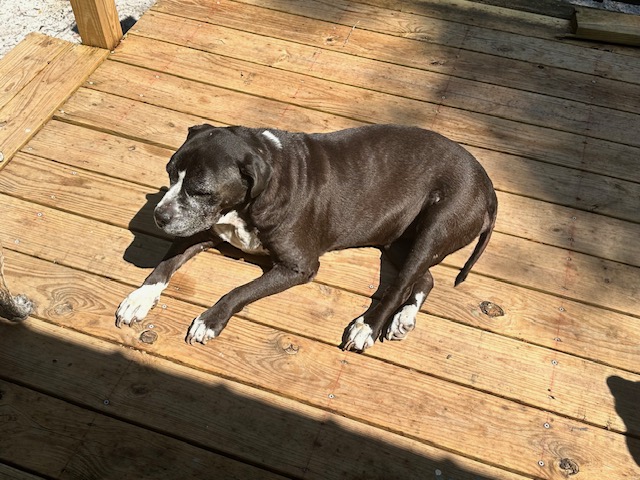
Lilith Anne’s Mosquito Patrol

Lilith Anne makes the slow journey out, plodding along like a death row inmate heading for certain execution, but the trip is essential. It’s ten in the morning when Lilith has her daily bowel movement. I prefer she has it outside.

            It’s optimum she does this away from the house, and if I do not walk along with Lilith, she will deposit her goods close to the deck. We walk down to the old dog kennel, where a bucket of fresh water awaits. I  return to the house, and Lilith drinks deeply and then off to the weeds to leave her pile.

            Lilith likes to lay in the sun on the deck, and I noticed a few days ago, when she returned from the weeds, a swarm of mosquitoes followed. Regardless of what might be said, mosquitoes aren’t excellent fliers and fly poorly in direct sunlight. It’s their hope to withdraw some blood and return to the humidity and shade from whence they came. Lilith is old and slow, therefore, an easy and lumbering target.

            The leaf blower sat nearby, and an idea formed.

            Using the power button judiciously, the air coming out was strong enough to blow the mosquitoes back but not intrusive to Lilith’s slumber. Of course, they would return undeterred, but I kept them at bay. Then one or two flew too high, and I was able to blast them, and a strategy formed. I used the nozzle to form a barrier around Lilith, and if any of her tormentors managed to go too high up or too far out, I blasted them with a burst of accelerated air. Lilith dozed unconcerned.

            After a few minutes of this aerial combat, the mosquitoes were thinning out. I watched as none returned to the arena, and Lilith slept comfortably under the sun.

Take Care,

Mike

The Sounds of the Sea

If you’ve never spoken to someone who worked on a submarine, it’s an interesting conversation. Sub-warfare is waged in total darkness and, ostensibly, in near silence. Yet the equipment that picks up outside sounds in the ocean stays busy because the ocean’s depths are a remarkably noisy environment. The water is moving, pulling, pushing, and swirling around, and with it, debris floats and falls, collides, and sinks again. The wreckage of thousands of years of human wanderings, voyages, and wars litters the blackness of the seas. Lost fishing nets will trap objects, drag, pull, and wrap around other detritus, which creates sound, some minute, others not so.

The earth’s crust moans and shifts, sunken mountains have slides of mud and rock, and boulders that have not moved in centuries tumble and crash downward, their journey marked by nothing but sound.

A submariner, blind yet all-seeing, would tell you the ocean is a vast, dark, and dangerous place, filled with its cacophony of its passage and mass. Like Braille, the sounds of the sea can lead the blind and perhaps even assist those who will listen carefully.  

The ocean is a disinterested goddess. Humans live or die, but she cares not at all. They may or they may not pass over the waves or under them; she does not notice.

This is the final word on everything once the salt water is sailed.

Take Care,

Mike

The Woman in the Blue Hat.

The dream dogged my every step today, slunk around like a second shadow, always there, invisible unless I looked directly at it, and even when I did, the question remained: What is this? But writing is not a process without its little quirks. I have no idea what it is, but what else might there be because of this thing?

The thing is a device, old, metal rusting away, tiny window, and it looks like an odometer. Standing at the edge of one of Valdosta’s side streets of a side street, Jenette Street used to be open to the public, but the University absorbed it. I dreamed a device stood at the edge of the street, had a button to push, and the numbers would spin for a few seconds, and like a slot machine, they would slow down and finally read, “1.4.” No such device exists. I looked. But why have something that tells you how far away the edge of the road is from that point? (Don’t ask me how I know what it does and why I know what it does, but I don’t understand why it does it, I just know, okay?)

You got a point to this, Cowboy, or are you just burning off some excess caffeine here?

And here we go. Buckle up, Kittens. Dreams can get away with this sort of thing. The device is either meaningless, or the meaning is lost somewhere in the imagery. Or I didn’t retain something I should have. This bothers me because that sort of thing in fiction is a distraction.

But suppose I write a story where the meaningless distraction is part of the plot.

First Swing: A cop is tracking down a serial killer. The man or woman who has been killing delivery drivers has killed four people, all in the same area of New York, and all were delivering food. The detective walks out of a restaurant, following a driver, when a woman in a blue hat approaches. She tells the detective a man in a white truck asked her if she was a driver and if she would deliver to his apartment. She gives the detective a description and hurries away.

The detective finds the man in the truck, but he speeds away at the flash of the badge.

It takes a while, but the detective catches the man, arrests him, and finds enough evidence for a conviction.

The detective seeks the woman in the blue hat. She saw the killer, spoke with him, and he asked about delivery. He doesn’t need her, but he wants to find her. But no camera captured her. No one else saw the woman, and it seemed she had vanished. Even after his conviction, where he confesses to other murders, the killer does not seem to remember this woman.

Is the woman in the blue hat an intriguing part of the story or a distraction?

Take Care,

Mike

Thrift and Drift

Wrex Wyatt is up at three something, wants out, and wakes up the other dogs, but I’m not buying. Four something comes and goes and I’m winning the war of sleep, but at five Wrex paws at me, hitting my cell phone and it lights up. The look on his face is epic. Wrex has discovered fire, well, at least light, and is amazed. I should not leave the phone on the charger overnight, and I know it.

Up and writing, or trying to but the Muse is silent, waiting for me to do something, waiting for me to offer a cue so she can, like a woman at a bar looking at a man, wondering if he’s going to speak. My main character treats me as if we’re on a first date that’s going bad, quickly, and she isn’t speaking either. It’s time to move.

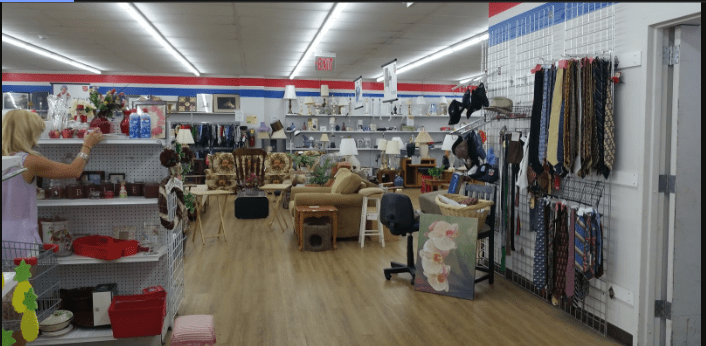
Thrift Stores speak to me. Inside one of the largest in town, castaway items crowd to the front of every flat surface wondering if they will ever find a home, or like a vaudeville show of old, just be on permanent display until the store goes under. An odd piece of furniture, part desk, part dresser, and all mutant speaks loudly. Painted by a five-year-old on acid, if I didn’t put a ban on me owning more stuff years ago I would buy it. Produce and buy until you die. No more of that for me.

Used bookstores are dead, reading is dying, and writing is being turned over to machines. The only bookstore in town is huge, lifeless, and lacking any reverence for books, and more like a prison, where books are sentenced, no pun intended. I look for old favorites, books that changed the way I see life, and it’s like going back to a childhood home that’s now in a subdivision with a strip bar next to a title loan place.

The big box hardware store is next for as a homeowner and a gardener, I never run out of things needed for one or the other. A woman, tall, blonde, and wearing jeans she was poured into walks past. I remember the first time I heard the phrase “peasant stock” in reference to a woman who wasn’t small of build, and I’m sure the person who said it would say it again here. But this woman has a glide to her walk, a slow shifting of mass and movement that speaks to physical grace as well as a body that is accustomed to moving in rhythm and in passion. The man with her stays close, but not possessively so. These two, I feel, have been together for a while, and their union has produced strong mutual attraction.

Once inside, I wonder what it would take to have a rain barrel on a stand, to produce water pressure, and for storing rainwater for the compost pile. And this speaks to me, too. Weight up high is never easy and shouldn’t be considered lightly. Fifty gallons of water will carry four hundred pounds of liquid mass, and that’s impressive if it were to ever start moving. Creative juices now begin to make their way through my brain. A metal stand, six fence posts, and some plumbing, yes, this is doable.

The Muse is delighted by all of this, and she wants more. Fiction writing later, she promises, and so right now, we start thinking about the Hickory Head Water Tower.

Take Care,

Mike

Last Station


“Get them moving, Mike, we can’t wait,” the man tells me. He’s right and I know it, but it’s hard to convince people just to drop what they have in their hands, what they have pushed in a baby carriage or a wheelbarrow, or however they got it here, just to drop it and go.

            It’s like looking at the world’s biggest yard sale, with items from their homes, things they remember, things they’ve owned since they were children and now, they have to move fast, and leave it all behind.

            “It’s my grammy,” a woman sobs, “she raised me, this photo is all I have left of her, there’s room for a photo, come on, it’s not that big.”

            “Nothing,” I tell her, and keep walking as she wails. It hurts doing this, but we have to go, and there’s no time left.

            “Look, look,” a man paws at me holding up a golden figurine, “I’ll split the money with you, this is an antique, it’s worth a lot, I’ll give you half.”

            “Drop it, and keep moving, drop it and keep moving,” that’s my mantra.

            “I can take Gary?” the little boy asks me, and children are the worst, and when their parents aren’t around its heart wrenching. He’s holding up a fuzzy stuffed animal.

            “No, you have to keep moving, there’s no room,” I tell him and he drops his head, tears falling.

            “You don’t have to be this way about it, they’re confused, lost, they have no idea what’s going to happen,” a woman snarls at me.

            “And you do?” I ask, pausing for just a moment.

            “I, uh, I made my peace with it,” but she suddenly falters, looks scared.

            “The job is yours if you think you can do it,” I tell her, and I keep moving. She’s pretty, and in another time, I would talk to her, but now it’s over, and the end is near for all of them. We’re pushing them forward, tears, questions, anger, resentment, but behind there is nothing left at all.

            Then it is over. I sigh. Looking back, to the horizon are suitcases, photos, beloved items that mean nothing and are worth nothing to anyone who still lives.

            “More coming in a few seconds, Mike, get them moving.”

            “Okay.”

Fencing, After the Rain

Rain, more rain, then it rained. Yesterday was nonstop waterworks, and that meant the fence might be down. The hotwire around the perimeter definitely. Dawn arrived late, cold, wet, raw, and the wind drove all warmth away from bare skin. The dogs went out with me, but only Budlore Amadeus remained. Bud has a sense of mission, the idea if I am out in the woods working someone ought to be with me, and that someone has to be him.

Bud and I walk the perimeter first. I look for one of the giant trees to fall one day, or shed a large limb, and that’s going to be a job that takes an entire day, or many. Those huge limbs from older Oaks weigh tons, not pounds, and Live Oak wood is dense and knotty. I hope nothing like this has happened, but if I live long enough I know it will.

The perimeter walk shows only one small tree has fallen on the fence, but I’ll need to lift it from the base to move it. It puts up a fight, wedges itself between a larger tree and the fence, so I have to wiggle it up, work the end of it away from the bind. Bud doesn’t like me being on the other side of the fence, and he watches with his ears up, his body tense, and a look of concern in his eyes. Bud is a simple creature; if it is different it is wrong in some way. This is an animal that has some sort of working breed in his DNA. Bud is a guard dog, a protector, and the only way for anyone to be safe is for everything to be exactly the same all the time. The tree gets freed and I go back over the fence, and Bud is happy. But the hot wire is as cold as the wind.

The pack I have now is the most secure that’s ever lived here. Bud is not going to leave the yard. He’s been out there and he didn’t like it. He certainly isn’t going to leave Mom, ever, for very long. This might be the only real home Bud has ever known. His job is here. Mom is here, and Mom is Bud’s real mission. Jessica Elizabeth won’t leave Bud. She is his shadow and isn’t looking to escape. Wrex Wyatt has bolted out of the front door two or three times, but he never goes far. Lilith Anne can’t walk away from home, much less run. Lilith is not long for this earth, and it will be sad when she goes. Lilith is the last member of the First Pack alive. Her passing will mark the end of an era in my life.

Of course, minor branches, small limbs, and downed Spanish Moss litters the fence. That’s normal. None of this is enough to ground out the hot wire, but I’ve done this so many times before, so I know there’s got to be something. Finally, a limb that has pinned the wire to the fence is discovered. Small, and not a problem, yet it’s grounded out the wire. I remove it and put the tester to the wire. Four lights blink on and off, the pulsating power of the fence charger now energizing the tester.

Bud thinks we ought to walk the perimeter again, just to make sure, so we do. Bud zooms ahead, stops to mark his territory, sniffs the fallen limbs, marks them, and if I had ten acres he might die of dehydration. I find small stuff on the fence, noting serious, and pull a vine out that was creeping up the fence. But overall, it wasn’t as bad as I feared.

I’m cold. Bud is cold, and the wind picks up. We’ll have to do this again tomorrow morning, I’m sure, but for the moment, both Bud and I are heading inside to warm ourselves. The fence is up, the electricity is coursing through the wire, and Budlore Amadeus has once again kept me safe from anything evil. We stop on the deck and I scrub his back, pet his ears, and tell him what a good dog he is. Bud wiggles with excitement, happy that he got to go out and work with me, and happy to return to the rest of the pack, and the warmth of home.

Take Care,

Mike

Darwin, Newton, and Me.

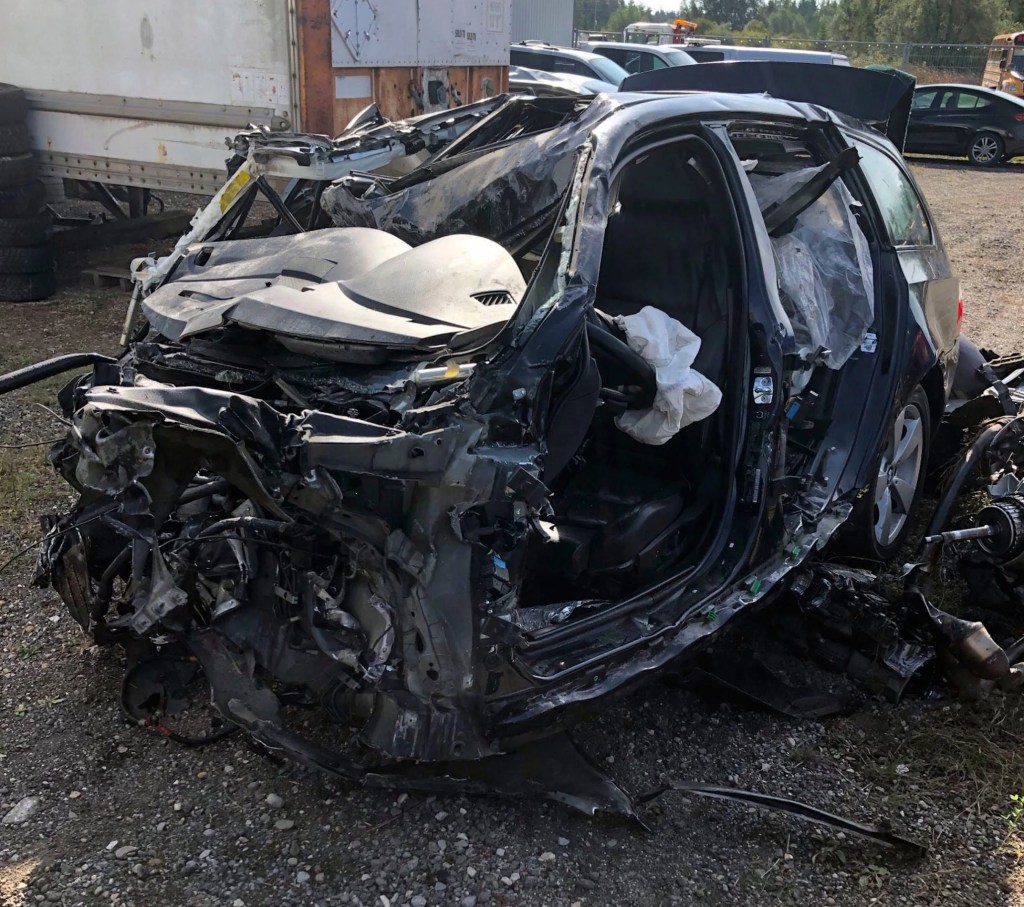
It’s so rare when a new form of stupidity surprises me in traffic it’s almost enjoyable when it occurs. Almost. The thing about traffic that some people seem to miss is traffic laws are a social construct that are transmutable, and the laws of physics are why people die in traffic, in horrible ways involving twisted metal, blunt force trauma, blood, fire, broken glass, and people behaving poorly after the event.

I would apologize for the digression, but honestly there seems to be a certain large proportion of the motoring population who do not understand the forces driving, no pun intended, vehicle accidents, and how to avoid these events. Rather, they seem bent, again, no pun intended, on daring Newtonian Physics to work against them.

Like Darwin, Newton has no fucks to give.

The car in front of me eases forward, we are both in the left turn lane at an intersection, Gornto and Saint Augustine, turning onto Gornto from the west, and all is well. There’s a line of cars behind me. Ahead is clear, the lead car has time to turn without tempting his particular god or Newton to smite him. He turns ever so slowly, and then inexplicably, he stops in midturn. 

Did he die? Did his car quit? Was he the one person in south Georgia that actually was Raptured? Did he stop to finish singing a Taylor Swift song about loss? I look forward. Cars are coming. I need an escape route if this gets any stranger.  Check mirrors, I can go straight into the left turn on the other side, illegal, scary, but the lesser of many evils, the greatest of those in traffic is not doing a goddamn thing when you could get the fuck out.

Get. Out.

Don’t stay with it. If someone is doing something stupid, just get away from them. Go. It doesn’t matter if you have to go ten miles to turn around, or if you miss your turn, or anything. Just go. Leave the circus, because Brother, I am here to tell you one thing for certain and that is stupid rarely self-cures and it most definitely gets worse before it gets any better.

The car eases forward, horns are honking now behind me, and the window of opportunity for escape is closing, but he is moving forward into the turn, and he stops. Again.

Now the only out is to pass him. It’s a single lane at that point, and to pass I have to go into the double left turn on Gornto, but that is still better than sitting still. Cars are coming towards me. The guy behind me is losing his mind; he is likewise trapped. I make eye contact with him in the rearview. “Follow me!” I send that thought and I am getting the hell away from all of this now.

Suddenly, the guy goes forward. Slowly, but forward, and I’m good, the guy behind me is good, but we’re the only two to escape. This guy in front is going ten miles an hour, but he’s moving.

He makes a right turn at Publix, and I am free. The guy behind me follows the offender into the parking lot. This might go poorly, but I am moving on.

I have never seen that form of stupidity before. It was amazing.

Take Care,

Mike

Forgive me Father Firesmith, For I Have Sinned

Early one morning, as in somewhere around three, I was talking to a co-worker while waiting for the road crew to start work again. A piece of machinery had died, and they had another on standby, but it would take an hour or so for it to arrive.

“I don’t really believe in God,” he said in a near whisper.

As the only atheist most people in south Georgia have ever met, I was used to this sort of admission. In the four different offices I had worked out of in my career, three of them had at least one person to tell me their faith was for show, and in an office where I worked temporarily, two people sought me out to tell me they lacked faith.

None of these people were willing to go public with this information, and I wasn’t going to out them.

Most people who confess, or unconfess, enjoy their life the way they are living it. They like going to church functions, they like the friends they’ve met while there, and they hope their kids grow up to be part of the same community they are involved with.

They simply do not believe.

“I never have believed,” the co-worker continued. “It’s never made sense to me.”

And this is how it happened with me, too. I never have bought into the whole supernatural thing. It’s like at Christmas when you hear the older kids talk about finding presents hidden in the store room, or suddenly the store room door is locked all of the time, or some kid wakes up to the sound of a bike being put together on Christmas morning. After a while, Santa Claus seems implausible, and finally, impossible.

The problem with Santa is parents realize threatening their kids into good behavior over his visit works. The same holds true for religion. It’s not a question of actual belief but rather having a system in place to guide behavior. Sin is bad because God said so and that’s the end of the debate.

It works, to a degree, or at least enough people pretend to believe, and that also works.

The wild thing about Christianity is you can judge people harshly for not believing, and trust me here, being honest about not believing in south Georgia has no benefits whatsoever, is that the same people most condemning of atheism are the same people who have the most trouble staying faithful in the marriages. Adultery was common among the men I worked with, and some of them were the most ardent fans of going to church every time the door opened.

Oh, but no worries, they are forgiven.

Martin Luther changed the way Christians looked at the ethereal world when he nailed his writings on the church door. At the top of the list his disapproval of people being able to pay the church to forgive their sins. Yet what does American Christianity do but call people good simply because they show up for church? They pay to keep the lights on, to keep the widescreen televisions blaring out the image of the high paid preacher, they have a place to go on Sunday morning to pay to be forgiven for what they did on after work during the weekdays.

Nothing has changed since 1507, has it?

Take Care,

Mike

Rabbit Holing.

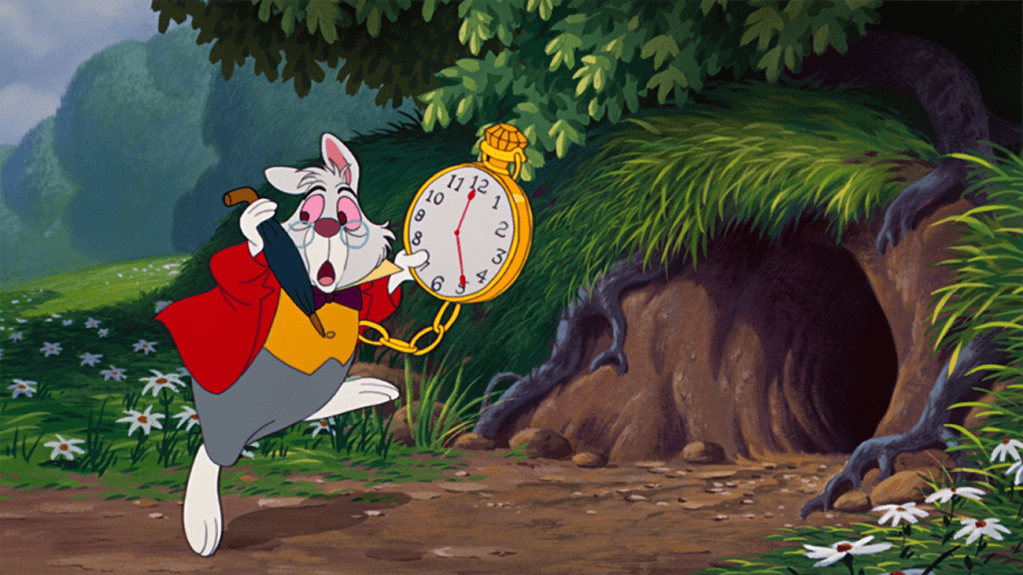
I’m Rabbit Holing this morning and cannot stop. A story set in Savannah Georgia has to have landmarks and street names, and even real places, so I do a search for Savannah and then start mapping. But then I need Civil War dates, and I need historical figures, and battle names and it is on.

I grew up one hundred years after the Civil War was fought, and the south not only lost the war, but was left in a state of economic ruin, which is what you get when five percent of a region holds ninety-five percent of the wealth. There’s a lot to unpack in that last sentence, but that’s another discussion for another day. That’s a very large, and very deep, Rabbit Hole.

There’s no real reason for this story to be historically accurate. The part that occurs in Savannah is a chapter or two. There is no reason for this sort of detail, except I want it. I want to put the scene in a bar where a band is playing to feel like it is in Savannah, no not way back when, but today, yet with the past hanging over the older people there, like it does me sometimes.

I was a kid when George Wallace was shot, and some people thought it was a sign of the Apocalypse. Yeah, but they thought that about bar codes, too, small group of people, so there is that.

But now I’m wondering if I ought to take a trip, or three, to Savannah, and find a local bar somewhere, meet some strange people, and set the story right there. I know people in that town, and perhaps that the way to do this, truly, but at the same time, something suggests that going solo would be better.

There is danger, real danger, is having even a chapter set in a place that is a floating island of history. If you get there, you might have to stay there, write more about it, and then suddenly the scene is the story, and all is lost, or all is found, it all depends on how it’s written.

Better, now that I think of it, to write a little, leave something dangling for one of the characters to return to, years later, or perhaps the daughter of one of the characters, returning to find the path her mother made into music.

See? See how easily one hole opens and none of the others close?

There’s a feeling I get sometimes, all of this is necessary, essential even, a story has to have more that wasn’t written than was. A reader who is really into the tale will feel it, will see the Rabbit Hole open, want to follow it, seek out my desires to go elsewhere, but return to the path, sensing the depths of the story untold.

Take Care,

Mike