Metric Fried Rice and Cooler Repair.

A friend of mine who just went through surgery won’t ask for help, won’t ask anyone to take out her trash or play with her dog, or bring her food, so her friends just do it. I called her and she said she was fine, the day after the operation, so I knew to go over and play with the dog and bring food.

The dog is a massive lab with muscles, and he likes to fetch and pull the rope toy until I make him sit to give it back. He’s used to playing with a woman that barely pushes one hundred pounds. I’m used to playing with big dogs. It doesn’t take me long to wear him out and wear him down.

But I got ahead of myself here. First, there was food. Let me say right off the bat, I despise living in a country that still uses gallons, quarts, and pints. I drop in on a Chinese restaurant and order a quart of shrimp fried rice and two egg rolls. The young woman behind the counter reaches over to a shelf then hands me a bag with food in it and smiles.

I do not smile back. I do not understand what just happened.

I look into the bag, and there are two egg rolls, but the container of fried rice is small. I explain to her this is not my order. She doesn’t understand. I explain I want a larger container of fried rice. She looks at the paperwork on the order and says something that isn’t English and I don’t understand it.

Meanwhile, because this isn’t nearly weird enough, there is a guy wearing a toolbelt trying to repair the cooler they keep drinks in. By the way, it is warm in this restaurant, and while not uncomfortable, it’s easing into that territory. The guy with the toolbelt is melting down. He can’t fix the cooler. How do I know this? Because he’s on his cell phone and has it on speaker.

“I can’t fix this, I don’t know how,” he says loudly.

“Replace the module going to the condenser,” the voice on the other end of the line says.

“I don’t know what that is,” the repairman laments. And he takes pictures of the guts of the cooler and sends them. They are basically walking him through the whole thing at a volume. But he sounds more than a little freaked out. I’m not sure why. This thing isn’t going to explode if he cuts the blue wire instead of the red wire, is it?

Is it?

Meanwhile, the young woman is floundering. I ordered what’s in the bag, so the bag is mine. She rings it up. No, it isn’t mine. Finally, she asks if I called in and I tell her no. She asks me if I ordered the same thing. I explained, yes, I did order shrimp fried rice, but a bigger container. Quart, not pint. And why, why on earth would anyone who is running a restaurant use these units of measure? But here we are.

Now. We have established what is in the bag is not mine. It is not mine because it is not what I ordered. The container, no matter what units are being used, is too small.

“Yes, too small,” the young woman smiles at me, and quite frankly, I never want a young woman to smile at me while using those three words.

And go.

A woman comes in, and it is her order. The young woman and I exchange a glance of relief. More customers come in, and another order isn’t right. The cooler repairman wails to his phone like a blues singer on a Saturday night. It’s getting warmer.

My order is placed on the counter. I look inside. It is exactly the same as the previous mistake.

It’s a pint, not a quart.

I could just cut and paste the previous section and save some trouble, but the manager wades in. Suddenly, she’s using the words “large” and “small.” Okay, large. Let’s ignore the menu and go from there, shall we? Meanwhile, this is going to add to the bill, which I have already paid with a card. I have enough cash to pull it off but have to wait. It’s getting warmer. The cooler repairman is getting excited because whatever it was they had him do isn’t working.

“The machine is unplugged,” I tell him. And by the way, he moved the cooler to work in it, and underneath that thing is a mat of black and ugly gunk that I would set on fire before I touched it.

My order is ready. It’s right. I’m gone.

But the whole ordeal cost me thirty minutes. What it did was negate what I was trying to avoid, and that’s the lunch hour rush traffic. I get stuck for ten more minutes trying to get out of it.

Let me be clear here. This isn’t an issue of having a woman from another country not being able to function at her job because of language. Yeah, that was a problem, but quarts and pints are stupid. Why use such things? Why do we live in a nation where two people cannot communicate the size or volume of anything because we’re still using units invented when a King was telling us we had to do it?

Take Care,

Mike

The Woman in the Blue Hat.

The dream dogged my every step today, slunk around like a second shadow, always there, invisible unless I looked directly at it, and even when I did, the question remained: What is this? But writing is not a process without its little quirks. I have no idea what it is, but what else might there be because of this thing?

The thing is a device, old, metal rusting away, tiny window, and it looks like an odometer. Standing at the edge of one of Valdosta’s side streets of a side street, Jenette Street used to be open to the public, but the University absorbed it. I dreamed a device stood at the edge of the street, had a button to push, and the numbers would spin for a few seconds, and like a slot machine, they would slow down and finally read, “1.4.” No such device exists. I looked. But why have something that tells you how far away the edge of the road is from that point? (Don’t ask me how I know what it does and why I know what it does, but I don’t understand why it does it, I just know, okay?)

You got a point to this, Cowboy, or are you just burning off some excess caffeine here?

And here we go. Buckle up, Kittens. Dreams can get away with this sort of thing. The device is either meaningless, or the meaning is lost somewhere in the imagery. Or I didn’t retain something I should have. This bothers me because that sort of thing in fiction is a distraction.

But suppose I write a story where the meaningless distraction is part of the plot.

First Swing: A cop is tracking down a serial killer. The man or woman who has been killing delivery drivers has killed four people, all in the same area of New York, and all were delivering food. The detective walks out of a restaurant, following a driver, when a woman in a blue hat approaches. She tells the detective a man in a white truck asked her if she was a driver and if she would deliver to his apartment. She gives the detective a description and hurries away.

The detective finds the man in the truck, but he speeds away at the flash of the badge.

It takes a while, but the detective catches the man, arrests him, and finds enough evidence for a conviction.

The detective seeks the woman in the blue hat. She saw the killer, spoke with him, and he asked about delivery. He doesn’t need her, but he wants to find her. But no camera captured her. No one else saw the woman, and it seemed she had vanished. Even after his conviction, where he confesses to other murders, the killer does not seem to remember this woman.

Is the woman in the blue hat an intriguing part of the story or a distraction?

Take Care,

Mike

Thrift and Drift

Wrex Wyatt is up at three something, wants out, and wakes up the other dogs, but I’m not buying. Four something comes and goes and I’m winning the war of sleep, but at five Wrex paws at me, hitting my cell phone and it lights up. The look on his face is epic. Wrex has discovered fire, well, at least light, and is amazed. I should not leave the phone on the charger overnight, and I know it.

Up and writing, or trying to but the Muse is silent, waiting for me to do something, waiting for me to offer a cue so she can, like a woman at a bar looking at a man, wondering if he’s going to speak. My main character treats me as if we’re on a first date that’s going bad, quickly, and she isn’t speaking either. It’s time to move.

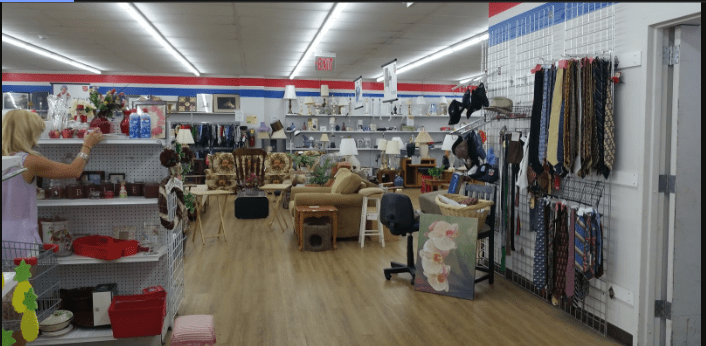
Thrift Stores speak to me. Inside one of the largest in town, castaway items crowd to the front of every flat surface wondering if they will ever find a home, or like a vaudeville show of old, just be on permanent display until the store goes under. An odd piece of furniture, part desk, part dresser, and all mutant speaks loudly. Painted by a five-year-old on acid, if I didn’t put a ban on me owning more stuff years ago I would buy it. Produce and buy until you die. No more of that for me.

Used bookstores are dead, reading is dying, and writing is being turned over to machines. The only bookstore in town is huge, lifeless, and lacking any reverence for books, and more like a prison, where books are sentenced, no pun intended. I look for old favorites, books that changed the way I see life, and it’s like going back to a childhood home that’s now in a subdivision with a strip bar next to a title loan place.

The big box hardware store is next for as a homeowner and a gardener, I never run out of things needed for one or the other. A woman, tall, blonde, and wearing jeans she was poured into walks past. I remember the first time I heard the phrase “peasant stock” in reference to a woman who wasn’t small of build, and I’m sure the person who said it would say it again here. But this woman has a glide to her walk, a slow shifting of mass and movement that speaks to physical grace as well as a body that is accustomed to moving in rhythm and in passion. The man with her stays close, but not possessively so. These two, I feel, have been together for a while, and their union has produced strong mutual attraction.

Once inside, I wonder what it would take to have a rain barrel on a stand, to produce water pressure, and for storing rainwater for the compost pile. And this speaks to me, too. Weight up high is never easy and shouldn’t be considered lightly. Fifty gallons of water will carry four hundred pounds of liquid mass, and that’s impressive if it were to ever start moving. Creative juices now begin to make their way through my brain. A metal stand, six fence posts, and some plumbing, yes, this is doable.

The Muse is delighted by all of this, and she wants more. Fiction writing later, she promises, and so right now, we start thinking about the Hickory Head Water Tower.

Take Care,

Mike

Darwin, Newton, and Me.

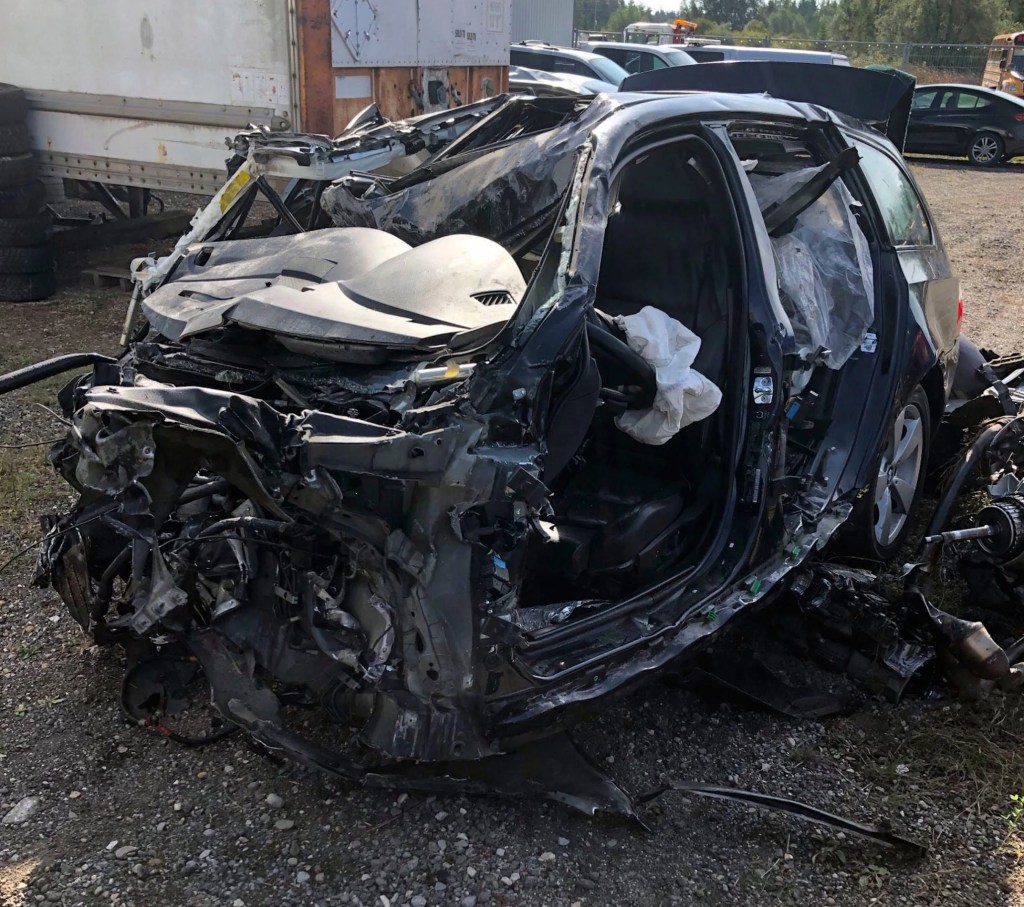
It’s so rare when a new form of stupidity surprises me in traffic it’s almost enjoyable when it occurs. Almost. The thing about traffic that some people seem to miss is traffic laws are a social construct that are transmutable, and the laws of physics are why people die in traffic, in horrible ways involving twisted metal, blunt force trauma, blood, fire, broken glass, and people behaving poorly after the event.

I would apologize for the digression, but honestly there seems to be a certain large proportion of the motoring population who do not understand the forces driving, no pun intended, vehicle accidents, and how to avoid these events. Rather, they seem bent, again, no pun intended, on daring Newtonian Physics to work against them.

Like Darwin, Newton has no fucks to give.

The car in front of me eases forward, we are both in the left turn lane at an intersection, Gornto and Saint Augustine, turning onto Gornto from the west, and all is well. There’s a line of cars behind me. Ahead is clear, the lead car has time to turn without tempting his particular god or Newton to smite him. He turns ever so slowly, and then inexplicably, he stops in midturn. 

Did he die? Did his car quit? Was he the one person in south Georgia that actually was Raptured? Did he stop to finish singing a Taylor Swift song about loss? I look forward. Cars are coming. I need an escape route if this gets any stranger.  Check mirrors, I can go straight into the left turn on the other side, illegal, scary, but the lesser of many evils, the greatest of those in traffic is not doing a goddamn thing when you could get the fuck out.

Get. Out.

Don’t stay with it. If someone is doing something stupid, just get away from them. Go. It doesn’t matter if you have to go ten miles to turn around, or if you miss your turn, or anything. Just go. Leave the circus, because Brother, I am here to tell you one thing for certain and that is stupid rarely self-cures and it most definitely gets worse before it gets any better.

The car eases forward, horns are honking now behind me, and the window of opportunity for escape is closing, but he is moving forward into the turn, and he stops. Again.

Now the only out is to pass him. It’s a single lane at that point, and to pass I have to go into the double left turn on Gornto, but that is still better than sitting still. Cars are coming towards me. The guy behind me is losing his mind; he is likewise trapped. I make eye contact with him in the rearview. “Follow me!” I send that thought and I am getting the hell away from all of this now.

Suddenly, the guy goes forward. Slowly, but forward, and I’m good, the guy behind me is good, but we’re the only two to escape. This guy in front is going ten miles an hour, but he’s moving.

He makes a right turn at Publix, and I am free. The guy behind me follows the offender into the parking lot. This might go poorly, but I am moving on.

I have never seen that form of stupidity before. It was amazing.

Take Care,

Mike

All Preachers Are Grifters

Watching the cursor blink, waiting, waiting, the first sentence was going to read, “I don’t like preachers” which would have been accurate, but imperfectly so. Let us try this, shall we:

I dislike preachers.

Yes, that’s more to the point, stronger, and says what I want the sentence to say.

This morning, zero early hours, I’m in the waiting room at the doctor’s office to give blood for my yearly checkup. I hope I don’t have rabies. After almost dying a couple of years ago or so, I’m more than a little paranoid about getting looked at once a year.

            The waiting room fills up, like a wading pool of sickness and injury, and the room may or may not be a launching pad into the Great Unknown.

            A man is talking to a woman, and he’s loud. Loudly loud. He has a spiel. I’m under the impression these two have never met, but he keeps telling her how “blessed” she is and how “blessed” he is, and how “blessed” it is to be here, bless his heart.

            He laughs every time he finishes a sentence, as if he’s a comedian. And the laugh is the same laugh every time. It has four syllables, like Ha ha ha HA! With the last syllable accentuated. I stop reading to watch. He’s talking loud enough for everyone in the room to hear him, and when any preacher does this, he’s sharpening his knives.

            He asks the woman questions, “Where do you go to church Ha ha ha HA?”

            “Oh, I go over there on the west side of town, it’s Unified Christian Hypocrites, and. . .”

            “Do you like it there Ha ha ha HA?”

            “Oh yes, it’s a good church, we…”

            “Who is your pastor? Ha Ha Ha HA”

He’s not only pumping her for information, getting her to talk faster and faster to keep up with him, he’s also making her feel more and more like she should. Used car salesmen use this technique to work people into buying a car. It’s fast, effective, and slimy as the feel of a preacher’s hand on your shoulder.

But this is minor deception, a sort of exercise, warming him up for bigger game, and I can feel it. The only difference between a preacher and a homeless person lying to get a few bucks is the homeless person has to be somewhat honest; preachers tell the biggest and the most lies than anyone you will ever meet, and their livelihoods depend on their ability to be great liars. This man is good.

“Mr. Marshall?” the receptionist calls, and the preacher stands up, makes a fuss about saying good by to the woman and have a blessed day.

“I’m Reverend Marshall,” he says with just a trace of that judgmental tone of voice that she should have known that was his title but she was too sinful to be aware. I’m sitting close enough to hear him. So were you, if you were in the same zip code.

“Reverend Marshall, you’re a new patient, we’re going to need cash, or a credit card, or a cashier’s check for your first visit,” the receptionist tells him. There’s a sign on the wall that has this information on it, at eye level, in a 48 font, bold. I’m also sitting close enough for the fumes coming off Marshall to choke me. He’s wearing some sort of perfume, cloying, sweet, and powdery, like cotton candy scented drywall dust.

“The Lord takes care of me,” Marshall says loudly.

The receptionist is a woman who has heard it all before, even if she hasn’t heard this before, it doesn’t matter.

“Yes sir, I’m certain he does. You’re a new patient, we’re going to need cash, or a credit card, or a cashier’s check for your first visit,” she repeats, and doesn’t bat an eye.

“The Lord takes care of me,” Marshall says loudly. “Ha ha ha HA!”

The receptionist sits there, counts to ten, silently, and then repeats what she’s already said.

Marshall laughs and waits.

The receptionist cocks her head to one side, and waits.

Marshall pulls out his wallet and says, loudly, “Money is the root of all evil, ha ha ha HA!”

“Thank you, sir,”

I give three vials of blood to the phlebotomist, while Marshall is talking to a guy who looks older than me by half again. Marshall is doing his rapid fire question routine but the other guy is hard of hearing, and hilarity ensues.

I pick up my paperwork and leave the medical professionals to the circus that’s come to town.

Take Care,

Mike

Zebras in the Grocery Store.

The Christmas crowds are finally gone from the grocery stores, and the roads. A brief yet smaller wave of people who are not usually in the way will appear this weekend, disappear, and then we’ll be fine until Memorial Day, when the summer crowds begin. But for now, things are almost normal on the roads.

The parking lot of the store is free of the frantic frenzy of the holidays, and I scan the area, looking for free roaming humans. I try to get from the truck to the door without having to come in contact with people, and it’s strange no one else I know does this. I can’t control what happens at the door, but getting there, yes. I can avoid people to a large degree. Where I always park is key to this. I can go in three different directions, three paths, depending on where people are.

The panhandlers like to set up just south of the entrance. I make sure none are around because approaching from the south is the shortest way to go. Otherwise, I head north and cut back in, or go in at an angle sort of north by northeast. Once inside, there’s little to do but adjust quickly but not too quickly, or it turns into a game of pinball.

The aisles of the grocery store cause choke points, and shoppers who are blissfully unaware of their surroundings make it worse. I can go all the way around someone causing a jam in the middle of the soup aisle before they can figure out there’s a problem and move. Children are the worst, for they are the product of people who lack situational awareness, so they have no idea it exists, much like the kids who have never seen a blacksmith or a miller.

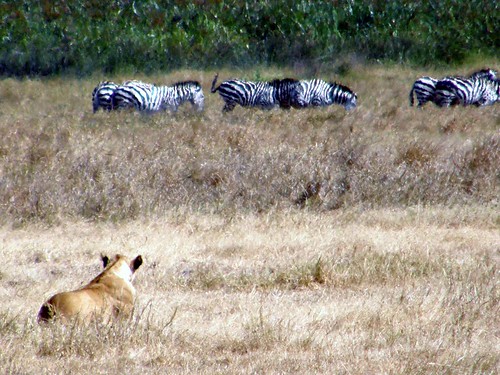
If human beings were magically turned into zebras on the Serengeti, the first lion to charge the herd could simply stop and wait. All of the zebras would run into one another, fight over who was going to be first, deliberately interfere with others, and some would just stand and stare off into space. In the wild, human beings would be extinct in about three days.

Take Care,

Mike

Schrodinger’s Barbara Anderson

The dream stayed in my mind, like the residue of honey in a refilled cup of coffee. It’s not there, not even the memory of the dream is there, nothing but something akin to a psychic aftertaste, something floating around in the mind like a speck of red dust in the air, reflected by sunlight for a moment in time, picked up by imperceptible currents in the room, before drifting back into the shadow near your closet.

It’s still there, it still exists, you know for a fact it does, but you also know you couldn’t find it, and by looking for it, by trying to define it, you would pollute and distort it, change it so completely as to destroy the vision entirely.

How can it be both there, not there, remembered, not remembered, forgotten, not forgotten, Schrodinger’s Cat, with your conscious being the radioactive isotope, that triggers the poison. Your subconscious doesn’t know if there was a dream, or if you dreamed there was a dream, but the if you look for it, you kill the dream.

Perhaps the same part of your mind that forgets people one millisecond after you’ve been introduced is responsible for remembering your dreams. It’s a faulty device, battered by television shows, bumper sticker politics, and Prosperity Religion. If you spent more time reading, you’re remember what you had dreamt in more details, and Barbra Anderson’s name after you met her.

You can feel it, can’t you? You know it’s there. You meet someone and you’re looking at her, she’s speaking to you, and her name was said out loud, you shook hands with her, and now you’re scrolling through names in your head without a road sign or a map to help.

Feels just like when you’re trying to remember a dream, doesn’t it?

When was the last time you did remember a dream? The dreamscape, the setting of the dream, was it familiar only while you were there, or it is a real place? The people, were they characters in your life, or did they only exist in your slumber? Perhaps there was fear, some creature that meant you harm, were you lost, were you missing someone, was there abject terror of death, fire, falling, bullets, bears, or Johnny with an ax?

Maybe that’s why we don’t remember dreams, it’s a self-defense mechanism keeping us from screaming during the day while we remember what happened in our sleep. And perhaps, for mechanisms we cannot quite comprehend, it’s the same reason we forget the names of strangers.

Take Care,

Mike

Fleas for Sale

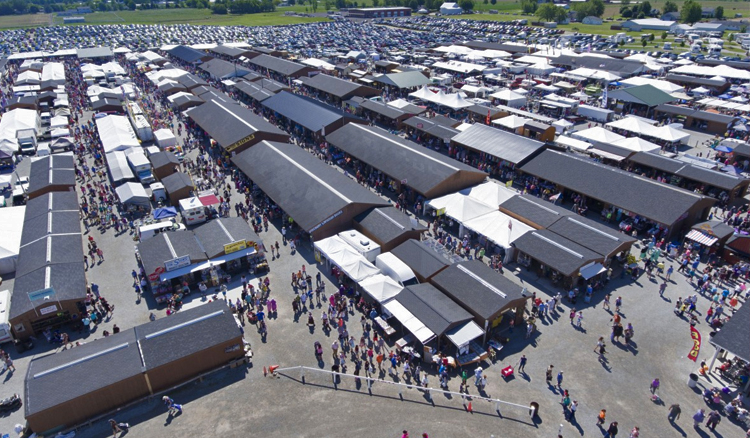
I went to a flea market today, a rather large one, and went early to avoid the rush. It was cooler than was comfortable, the wind was blowing, and the feeling of being out of place cut deeper than the cold.

The older woman selling honey growled the price out, her tone of voice suggesting anyone who wanted the honey badly enough would somehow discern the price, perhaps telepathically. Dressed for the Artic as she was, perhaps she feared a transaction might somehow weaken her defenses against the soon to arrive blizzard or distract her while a polar bear ambushed us both. Her gray hair was pulled back and stuffed into something that mostly resembled a hat, and her face was crinkled with deep grooves that spoke of poverty and bad choices with men who came into her life like trees falling onto a house. I moved on.

It’s a covered flea market, with a few enclosed shops, but mostly just a roof, with nothing to slow the wind down. Smokers with their cigarettes can be smelled a mile away, and some guy selling cheap tools is talking loud enough to be heard over the smoke.

“They ain’t gonna do it,” his voice rising with the power of his opinion, “I bet they ain’t, com’on, you bet me, they ain’t gonna do it,” and he takes his white cowboy hat off and waves it at imaginary betters in the air. He’s one of those big hat, big belly, big belt buckle men, with a shirt that’s red and white checkered, like someone stole a picnic tablecloth and tortured it with a sewing machine. The tools on the table, still in a package, are lightweight, no steel or iron, and they’ll break during hard work. But this is a man who is putting on a show, advancing on the would be customers like ants at a campground, who brought their own picnic tablecloth. Meanwhile the three guys he’s talking to, slowly back away, not gambling against his info. One of them gets far enough away to turn around and make a break for the next stall, and the other two now have an excuse to follow. Cowboy Hat Man snorts, and looks around for his next audience, but I’m on the move.

I was once good at this, navigating crowds, weaving in and out of people effortlessly, a shadow barely seen or heard or felt, but it’s been too long now. The Plague has sapped me of my invisibility. Stopping, sidestepping, waiting for people to move, my glide is gone, the people moving the wrong way at the wrong time, and collisions nearly occur.  

Another shop is selling confederate flags, but near the back, in plastic packages, not on the wall like they once did. There’s a flag from the old Soviet Union, hammer and sickle, and it’s not being flown either. More cheap tools, but this time power tools, deeply discounted, in case you need a power saw for one project, you’d likely get it. Machetes, two for ten dollars, or five-fifty for one, thin, cheaply processed metal, and you couldn’t hack your way out of your 70’s girlfriend’s pubic hair with that thing.

Used clothes, more clothes, clothes, clothes, clothes for sell, dresses, jeans, shoes, and even hats for sale. The jeans are going for twenty bucks, a green down jacket for twenty-five, and this morning that’s a bargain, and I wonder who owned that jacket, and why they sold it, and how the jacket came to be here.

A teenager, young girl, is sitting in a chair at a small table, not seeing me, not seeing anything at all. She’s the daughter or granddaughter of the shop owner, and if this girl was holding a gun on you it would be your last moment on earth and you would be certain.

Her eyes are boring a hole through the air, through everything there, the people, the used clothes, the treason rag, the flimsy machetes, the parking lot, the hostile honey salesperson, and nothing from the outside world can break through that stare.

I want to sit down next to her, and ask her why the stare. With someone who is a young teen, it could be social media, or it could be she’s trying to figure out why her body and mind are going through what they’re going through. It could be the cold boredom, endless, dirty, smokey, cold boredom, of used retail, cheap clothes off dead people sold to the dying. Or it could be worse, much worse, as she found a hidden camera in her bedroom, and her new stepfather is creepy. Tell her Mom about it? Not tell Mom? Tell social media, tell no one, silence encourages aggression, she already knows that, and that stare is trying to decide if she walks away right now, into the abyss of the world, would it be that much worse than what awaits her in her own home? The stare lazars its way through me, past the greasy food stands, past the shop selling boom boxes, past the used CDs, past the next state and the next country and into deep space, but she will find no help anywhere anymore.

Moving quickly now, the mojo is returning, and I dodge those who are milling around like cattle in a pen, grazing on anything that might be slightly interesting in the cold stockyard of the flea market. It’s time to go, time to get away from this place, and as I leave the old woman with the honey calls out, wanting my money, even though she rather not speak to me again. I pull out, another car pulls in behind me, and someone will buy fleas here today, I think.

Take Care,

Mike

Exit

I remember seeing Greg at Exit 16 for the first time. An odd sight, for there to be someone I knew, someone I had worked with, someone who I had drank with, and someone who was going to college at some point, living under the overpass of I-75. But there he was, sitting, waiting, and homeless.

There were drugs involved, also stealing, cheating people out of money, lying, and it was the lying that seemed to be the worst part of it. Greg became a living lie, with every word and every sentence based on creating a narrative that would somehow transfer money from someone else to his use. Greg and I had reached the logical conclusion to our friendship when he stole from me. Trust was no longer possible, and no longer feasible. But Greg had run out of friends entirely and run out of second chances with anyone he had ever known.

If there’s any truth in the story, Greg’s family had worked hard to get him into college, get him where no one in their family had ever been, and he lasted one year. Cocaine was Greg’s thing, because it represented a lifestyle he could only bear witness to by watching television. Greg and I both worked at Shoney’s, the one on Ashley Street, and I remember him telling me he wanted to be a cocaine dealer. Greg got into crack instead, and he stole his father’s truck, and then looted his family’s home, and sold everything he could put in the truck at a pawn shop. He did that to his girlfriend’s mother, having a yard sale at her house while she was at work. And he stole stuff from his roommates. They threw his stuff out into the yard, and Greg set his bed up in the yard, close to the street. I drove by when I heard about it, and sure enough, there was Greg lying on his bed, in the open, in the yard. The first big rain ended that, and Greg retreated to Exit 16.

For not the first, and not the last time, I stopped and picked Greg up, took him to get something to eat, and turned down every request he made for money, and that was a nonstop thing with Greg. The year was 1985 or maybe ’86. I moved away in 1992, and didn’t give Greg a second thought until I saw him at Exit 16 again, but this time it was 2004.

People who have lived on the road for a while, and I’m talking about those with substance abuse problems, have a smell. Not the unwashed smell of someone who has been working all day in the sun, but a sour smell, of chemicals and alcohol seeping out of their bodies. Frequent walking in the sun bakes them, dries them out, fries their already tormented skin, and they begin to look a lot older than they already are. Being homeless is stressful. There’s no telling who or what is going to happen to you. Greg was now missing teeth from fighting with other homeless people, and someone had thrown something out of a car window and hit him, or so he said. Lies, lies, and more lies, Greg had a narrative of his life as someone who just needed a little more help, just a little more, and he would change.

I’d buy Greg food but never give him money, and someone gave Greg a job about the time I found out he was still in this area. He got fired for panhandling during lunch, with his employer telling him not to lie to people about needing work when he was on his lunch break. The man fired Greg after one day.

I went a very long time not hearing from Greg, and not hearing anything about him. I worked two interstate construction projects, and met a guy who knew him, or claimed to, anyway. Finally, about five years ago someone called me to say Greg’s body had been found along I-75 in Florida. He was off the right of way, in a patch of trees and bushes, and died there, apparently. His body had decomposed to the point there was no way to identify it. Because he was considered homeless and not missing, there was no one out there looking for him, so the body was cremated, and that was that. The only way anyone ever knew who he was is they took X-rays of his teeth and that matched dental records when they finally got a match. I’m not sure how all that works. But his former girlfriend saw me one day at the gym and told me. Apparently, the ashes were already gone by the time anyone even knew Greg was dead.

I saw Susan again today, she saw me, but she was with her family and I know she didn’t want to talk about how I once fit into her life. I was a friend of her boyfriend, and I was there when he was working, and people trusted him. We went out and drank beer, shot pool, ate food we can’t eat anymore without gaining weight, and I remember Susan and I talking once time, about how odd it was that each individual in that tiny bar had come from somewhere else, yet we were all there, at that very point on Earth, at that very point in time, and it was all very unlikely, yet we were. Now, she and her husband are meeting the kids for coffee before church, and there are small people who look like grandchildren with them.

Somewhere out there, unlikely people are meeting for the first time, or seeing one another for the last time, and as unlikely as their meeting might be, it still occurred, and there may or they may not be, some memory of it stored in the brain of a person, or maybe ten. Then one day, one of those people might die along the interstate, thousands of people passing as a funeral procession, and no one knows how death came or where it went next. Like an endless stream, people in your life come and go, and then one day, the last person who remembers you will be gone, and the last person who remembers that person will die, too. And nothing you ever remembered will still be with here, at least not from your point of view.

Take Care,

Mike

My Date With A Cannibal

She was an angry woman, someone who had been wronged, and clearly, she was one of those people who rather be anywhere else than where she was, no matter who she was with. I didn’t want to do the bar thing, so I signed up on Match and started trying to shed a divorce that had begun to stick to me like a second skin. We were like two in that, she and I. Neither of us knew it at the time, but what we had in common was invisible, and both of us, once we realized it, had to part forever.

We met at Books-a-Million, and from the first few minutes, I thought she was about to get up and walk out. But we had read enough books to find comfort in trying to figure out what else there might be. She wrote poetry, but rarely, and I wrote too much fiction. There was a movie we both wanted to see, so we sat in the dark and in silence, which is what movies are good for, in the final truth. After a while, we held hands and watched the credits roll.

“I hear there’s a good Mexican place in Quitman,” she said, and I offered to buy her dinner there. She followed me to the restaurant, and we drank Margaritas and listened to a couple sing slightly off key.

We said our goodbyes at her car, and she told me it had been a great time but it was the wrong man at the wrong time, and if it was okay, we needed to part ways. I had just paid a lot of money to be shut of a woman so I knew it was a gift to be able to simply walk away.

I pulled into my driveway and she pulled in behind me. “Let not talk about it, okay?” and we didn’t. We smoked a little pot she had, drank Scotch that I had, and very slowly, but most certainly, she allowed me to ease her into my bedroom.

About three in the morning, she got up and dressed by the light in the bathroom, and I propped up on one elbow and watched.

“Left at the driveway, right at the light in town, right?” she asked.

“Yeah,” I replied.

“Don’t call me, please,” she said.

“Why?”

“I’m married,” she said and neither of us spoke again as she left.

It was another couple of months, and I was still adrift in the sea of unhappy people looking for other unhappy people on computer screens, and a text popped up. She showed up at my house an hour or so later, and she looked happier, somewhat, but we still didn’t want to talk about it.

“I got divorced,” she said, “but I’m not looking for anything right now.”

“Why are you here?” I asked. I had almost fallen asleep.

“I thought you’d get a kick out what happened when I left here last time. I went home. I had been gone most of the day, most of the night, and when I walked into the house my husband was sitting in his chair playing some video game with three of his friends, just like they were when I left. None of them had so much as changed positions. I don’t think he realized I had been gone. I sat and watched them play, knowing they would be there, endless hours followed by endless hours. I propped my feet up on the arm of his chair and cleaned my nails by scraping them against my teeth. There were tiny pieces of your skin under my nails. I held each piece in my mouth, just letting it sit there a bit, then I swallowed them. Pieces of someone else inside of me, in more ways than one, and me just a couple of feet away from a man who wasn’t aware who I was anymore,” she said.

“That’s fucked up,” I said, fully awake now.

“That’s marriage,” she said, and I never saw her again.

Take Care,

Mike