Heat and Light


If you work in a factory making widgets then in eight hours you’ll have some amount of whatever you’re making to put into boxes and ship off to China, or wherever they’re sold. If you mow grass for a living then you can look at a lawn and be satisfied you’ve beheaded enough blades to earn your pay. A highway worker can pave a road and see the results, and be happy the road is smooth.

But writing means nothing more and nothing less than throwing dice where the pips are obscure, and the wager unknown. A day’s worth of writing might mean you merely discovered what part of the plot does not work at all. A finished piece of work may hold no one’s interest. A novel a writer devoted a lifetime into finishing may not sell at all, not one copy, except friends and family, who are just happy it’s over and done with.


Accept this. Live it. Take your work, print it out, and burn it, for the heat and light from the flames might be the only useful thing all your devotion to the Muse ever produces.


Then realize it doesn’t matter if it’s never loved or appreciated, or printed, or sold, or even seen by another living soul.


And get back to writing.


Heat and Light.

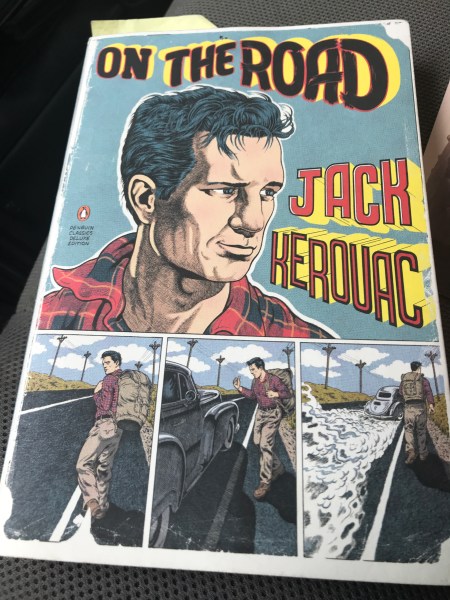
On The Road: A Book Review

Jack Kerouac’s “On The Road” is widely considered one of the seminal pieces of work on the Beat Generation, and I finally got around to reading the book. It’s a fictionalized account of his cris-cross country travels with a friend of his, Dean, who was Neal Cassady, in reality. Several of the characters in the book are based on real people, but Neal Cassady seems to be the main character.

First off, there’s parts of the book which are wildly vivid in the descriptions of people and landscapes, and moods, but there are also vast passages spent on describing personal poverty, theft, grifting, and the idea there is a counter to that day’s culture. Yet at the same time, as much as Kerouac would like to present a world outside the white picket fences and nine to five jobs that normal people have, he and his could not exist without living off these people to a great extent.


Yet there is something here, a warning we did not heed, and Kerouac’s voice ricochets from one coast to another, describing a nation that is changing its identity and losing its soul. This was all occurring after World War II, in 1947 or so, with the people of the country more prosperous, yet somewhat adrift. The war that defined them is now behind them. What to do next?


Sal, the character that is the narrator and Kerouac’s voice, takes off with Neal Cassady and bounces around the country, philosophizing and drinking hard. There’s sex and drugs and jazz, and I wonder what would have been written in a day where Kerouac’s sexuality would have been more widely accepted.


At the end of the day here, I have to reread this book. I have to tap back into the spirit of the writer, because this is a very well written book, and remember this was a piece created before I was born. The language is different, but not alien. The cultural references are obscure, but not unknown to me, dig? The life of wild drinking and untethered sex, long before HIV or any of the other scary sexually transmitted diseases is a long lost dream. The Golden Age of Jazz began right in front of their eyes, and you have to wonder if anything like that will ever happen again, in any form.


In another twist, despite their lives of bouncing around, staggering about from one side of an continent to the other, Kerouac manages to write. He gets published. And he takes enough notes to produce a cohesive work that leaves me mystified. I yearn for a life spent wild and free, but at the end of the book, Sal and Dean part ways, and Sal leaves that life behind.


“On The Road” isn’t a book written for the mainstream or even those near the edge. It’s a book written for those of us who have slept in bus stations and under overpasses, for those of us who have set foot on the road with no means of getting to one place to another, but bent of traveling anyway, and we always made our destinations.


Take Care,

Mike


Why Black Lives Do Not Matter

Screen Shot 2020-06-04 at 9.49.48 AM

If you don’t think racism in America began with slavery you either haven’t read much history, or you’re in total denial there is a problem. Black people were chosen as slaves because it would be impossible for them to hide among the native populations, which was being systematically destroyed, and it would be impossible for them to pretend they were part of the colonial people, most of which were oppressed financially, too. 

Slaves, and slavery, were symbols that people with money could own, control, whip, beat, torture, and use for their profit or amusement, other people. People without money saw this sort of behavior as something to aspire for in their own misery, that they too might one day be good enough to treat other people like this. This is the very soul of racism. This is it. Look at it. 

Racism in America is a form of elitism. It’s always been a way to show off how good you are as an American. Hate equals success. 

From the very beginning of this country, slaves were used not in the name of convenience or for needed works, but for profit. If we have learned nothing about capitalism, we have learned there is no concern higher than profit; not human life, not the health of the planet, not the welfare of the seas, and not even the air we breathe. So the lives of slaves were never a concern. Slaves equaled black people. From the very beginning, black lives did not matter. 

When this country separated from England, in violence and anger, freedom and liberty for all didn’t mean women could vote, and it did not break the chains of slavery. They could have, our Founding Father might have taken that step forward, but the profit made from the lives of people kept in chains and abject poverty did not matter. 

Seventy years later, when most northern states had abolished the practice, the southern states withdrew from the union rather than free the slaves. For the next five years a nation tore itself apart, with one side fighting to its very ruin rather than using waged labor and fair working practices to produce an income. This was more than mere predatory capitalism, oh no, in this the very heart of extreme racism began to beat, and beat very loudly. 

For the next one hundred years, black people were not allowed to vote, even in places where it might have been legal. There were separate schools, separate hospitals, separate waiting room, bathroom, drinking fountains, rail cars, housing, restaurants, movie theaters, and no black person would dare sit next to a white person anywhere, but especially the south. 

Separate but equal became the battle cry of the racist government and the racist citizens of America. 

In theory, things changed in the 1960’s. Martin Luther King’s campaign for equal right did much to elevate the rights of people of color, and there was more acceptance of black people in society. Overt signs of racism all but disappeared. Yet America was still very much a segregated society. White churches were white, and black churches were white. White neighborhoods were white, and “there’s goes the neighborhood” was the refrain when someone not white moved in next door. 

Still, the country crept forward. There were black men and black women as astronauts and judges, and even a man of color as President of the United States. This should have been cause for celebration, and it was, but it also revealed a society that was deeply divided, and that divide was fuel in the worst form of hatred that America ever called its own. 

It is no surprise, and certainly not a shock, that after the first President who was not white, came a demagogue, a person dedicated both to his own personal wealth and to division. A man who would stoop as low as he could, or thought possible, preached the gospel of division and hate, filled social media with insults, name calling, and race baiting. The dog whistle was music to the ears of the racists, who finally had one of their own in the White House. 

Racism did not die, it was not killed, but it became camouflaged. Fuel by encouragement from the highest office, who claimed some Neo Nazis were very fine people, a war against people of color that began in Jamestown, and continued for every year since, was fueled by the thought that America would be made white again. The same president that decried brown immigrants as animals and an infestation would certainly look the other way as people of color were murdered by rouge cops, who knew their actions would go unreported, and unchecked. 

Black lives do not matter because of the race baiting president in the White House, who uses race to divide, so there will be no unified people to fight against his policies of looting the taxpayers to enrich big business. 

Black lives do not matter because there is profit in having a class of oppressed people who are willing to work for minimum wage, or worse, infinitely worse, cannot defend themselves against mass incarceration for profit. 

Black lives do not matter because there is money to be made off their misery, just like there was in 1850, just like in 1950, and just like in 2020. 

Don’t hashtag “BlackLivesMatter” on social media, and then sit content with that as the total sum of your worth to a people who desperately need your help. 

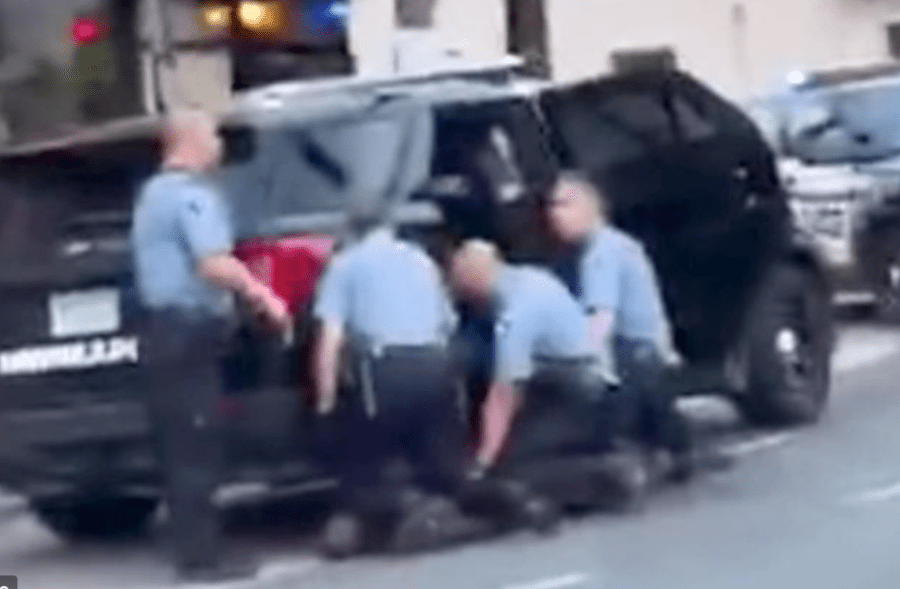
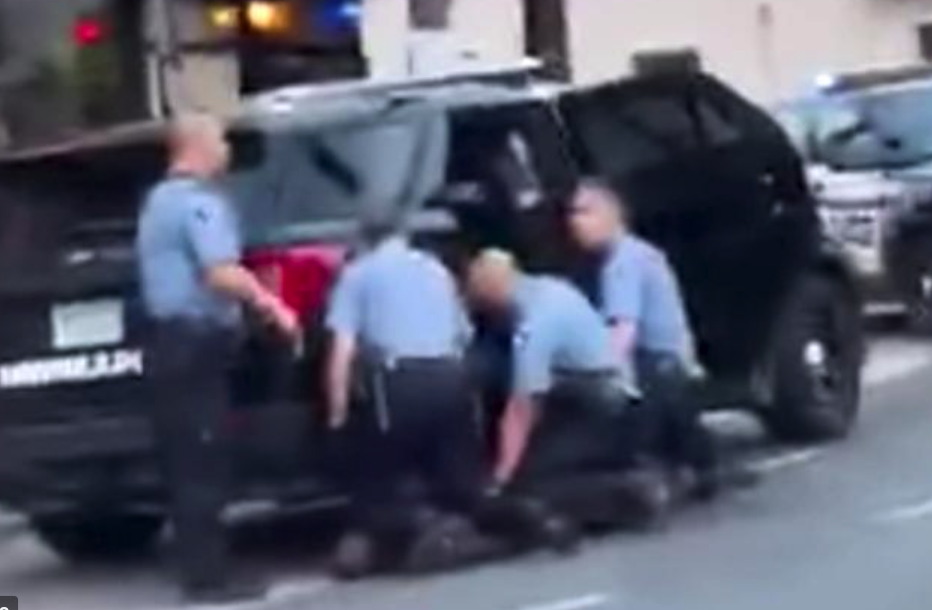
The arrest of the four cops who murdered George Floyd is the beginning, the very first step, not the end of the race. 

Black Lives will not matter until there is a new president, and a new government, but most of all, Black Lives will not matter until the people in this country address mass incarceration, wealth inequality, opportunity and education disparity, and most of all, most desperately needed, an understanding of racism, and how it is still here. We white people have to do this. We white people have to understand our own demons, and we have to put them away, forever. 

Black Lives do not matter to white people, not yet, not nearly yet. 

But maybe we’re seeing something different now, with white people in the street, fighting, being gassed, getting hit with rubber bullets, and spilling their blood for equality. 

Get out there, White People. Get out there and fight. Get out there and say it, and mean it, and show your children, and show the candidates that you’re willing to bleed as well as talk. 

Then say “Black Lives Matter”

Because then, you’ll finally mean it, and it will finally be true, for everyone. 

Take Care,

Mike Firesmith.

Violence is the Answer

Screen Shot 2020-05-31 at 8.24.14 AM


If you don’t think violence is the answer then you haven’t been paying attention to the question. Let’s go back, shall we, to 1776. The American Colonies took up arms against the British Empire and waged a shooting war that killed tens of thousands of people. We celebrate that war. We glorify the action taken. It made us free. Well, not really all of us. There were many black people held as slaves at that time who were not free. The War for Independence was not their war.

Most of the African colonies, were brutal, savage, and profitable affairs, at least for those doing the colonization, and most of those countries became unfettered through violence. Over in India  that was an exception, mind you, and there’s lessons to be learned from how they were able to not start a war and still start a country. At the end, however, there were many Indians who were murdered by the British, yes, those same British, in order to be free. The IRA fought a guerrilla war against the British, yes, dammit, those same British, for years. Violence is a useful and convincing tool that commands attention and it has been used in the past very effectively.

The orgy of violence that occurred during the America Civil War is a very good example of how violence can be used to transform a country, yet not solve underlining problems. Before we start there, let’s step back and step away from the topic of violence, and talk about the real issue here; racism.

I’m going to stop the conversation with some fairly gory talk, and it might be something that makes you flinch, but it’s time. We’ve been taught in history classes that our Founding Fathers, Great Men All, might have owned slaves but they weren’t racists. We’re told times were different back then, and they didn’t consider black people to be fully human, and that’s the excuse for keeping blacks as slaves, because the Founding Fathers, Great Men All, were not raised to consider the possibility that someone who looked very much human, except the color of their skin, might actually be human.


But this is a lie.


If they truly believed black slaves to be nothing more and nothing less than livestock, then why weren’t slaves on the menu like all other farm animals? They Founding Fathers knew these people were human and they knew what they were doing was wrong. Using slaves, stealing people, kidnapping people, beating people to make them work, was wrong, but it was profitable, and there was no one around to try to stop them.  Seventy years later, when slavery became an issue, the people who had stolen and enslaved other people were willing to fight a war to keep their profit.


Remember this also: During the time in American history, when black people were being kidnapped and their lives, their children’s lives, and entire generations were kept as forced labor, the white Americans were systematically and very deliberately committing genocide. The native people who lived in America for thousands of years were being killed off and hunted into extinction. They didn’t eat the natives, either. At some level, they knew those people were human beings and they knew what they were doing was wrong. But the idea of free land, in the land of the free, overrode their civility.


Any argument of moral ambiguity is lost when the facts are repeated out loud. They knew what they were doing and they knew it was wrong. They just didn’t care, so people were killed and people were enslaved. They simply cared more for material goods than they did human life.


Here we are today. It’s been over one hundred fifty years since slavery has been outlawed, yet those years have been fraught with peril for people who are not white. They own less property, are less educated, have inferior health care and substandard housing, and are incarcerated in for profit prisons at a rate that staggers the mind. Black people are killed at over twice their demographic percentage than are people who are white.


Video after video after video shows unarmed black men being shot by police, and in some cases, for no good reason at all. In some cases, it is clearly murder. Yet the conviction rate for policemen who shoot black men is practically zero.


There was, and still is, a lot of White Outrage because black athletes refused to stand for the National Anthem. This White Outrage is both unfounded in reason, and based on the kneejerk Facebook type of public discourse where there has to be an immediate, and therefore thoughtless reply to everything, and it is more often than not polarizing. That’s making things worse, and it’s not addressing the real issue here, which is this: If you truly believing violence is not the answer, then why didn’t you react the way you are reacting right now, when black men were being murdered?


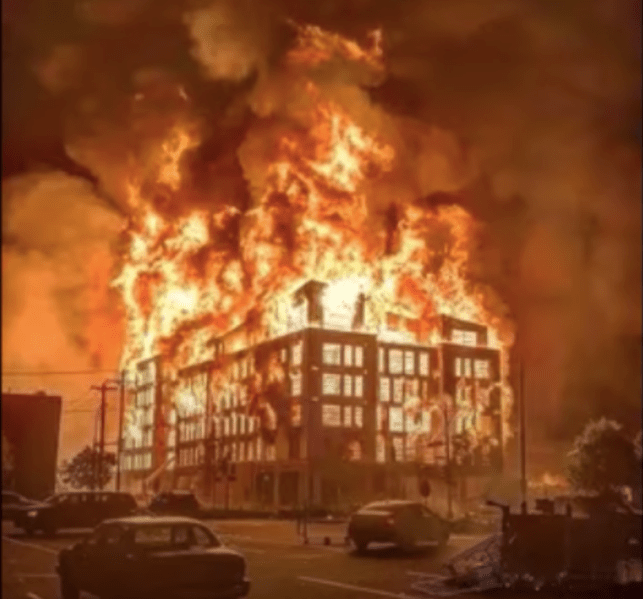
A black man gets shot right in front of you, and you don’t react but the sight of a burning building causes you to get angry? You have the same mindset as a slave owner at that point, you do realize that do you not? Property over human life, is where your emotions are. How did you get to be that type of person? Don’t you care?


The answer to this question is the same answer to the same question so many years ago, when slavers were raiding Africa and kidnapping people. The deaths of black men do not affect the average white people no more than a family being broken apart and sold to new owners affected white people in 1851. We white people are indifferent to the suffering of black men, the beating and imprisonment of black men, and the murder of black men, until we see a building being burned on videos on YouTube.


Why don’t these people give peace a chance?


You now, I hope, understand why that question might not go over well, especially with the family members of murdered black men.


What you see is what you get. White people have been silent and apathetic. They’ve secretly wondered if these black men were thieves, rapists, murderers, and the police were just doing their jobs, ma’am. We’re a divided and segregated society in our hearts and in our minds. Our souls are segregated.


What you’re seeing is civilization being stripped away. People who have longed for justice have reached the point they no longer believing it’s possible to achieve through social media and bumper stickers. What you are seeing is rage, and there is more where that came from, Brothers and Sisters.


Violence is the answer. It’s the only way to find a signal strong enough to reach people who still aren’t reacting to the incredible racial divide in America. Violence is the answer. Rioting, burning, looting, killing, and widespread destruction is the answer. It will continue to be the answer to the question: Why aren’t white people doing something about this?


When we white people get off our sofas, log off the laptop, stop binge watching Friends on our widescreens, get into our SUVs, drive down to the local protest, and get out into the streets with our fists and our voices raised, black people aren’t going to trust that violence isn’t the only thing that won’t wake us up. They aren’t going to trust that we believe in America. They aren’t going to trust we believe in liberty and justice, for all.


We can do this without violence. We can do this without hate, without death, and without destruction. No violence is not the answer, because Martin Luther King taught us it wasn’t, because Gandhi taught us is isn’t, and violence begets violence, we’re sure of that. We know better than to believe violence is going to make the world a better place because it never has, and it never, ever, will.


But as long as white people allow violence against black men, and as long as white people sit in silence when there is injustice, and as long as we care more about our convenience than we do the lives of other human beings, violence will continue.


If we white people do not speak against violence in our homes, in our churches, in the schools, and in the voting booths, until we take to the streets in peace and with our voices raised, violence is going to be the answer to our silence.


Violence is the answer to the question, “Why is it the white people do not care?”


Search your hearts, white people, for the answer to that question. And if you believe, truly believe, that you do care, get out there, get out there right now, be surrounded by black people in a protest and tell them you believe, and trust me, you’ll be welcomed. They need you, they want you there, and nothing will make the protestors happier than to see what Martin Luther King could only dream about: people together making a difference. Without violence.


I’m asking you to care. That’s the answer to violence. It’s what will shut it down.


Mike Firesmith
Sleep? Where!?!?!???

clock

Sleep has abandoned me, as it is wont to do, and even as I write this I wonder how many times I’ve sat down next to the bed to write instead of sleeping. It was a burden, to write late at night, when I worked for a living, but retirement brings a sort of timelessness to the day which allows writing without the feeling of regret late in the work day. To write or to work? To write or to sleep? To write or do mow the yard, or go out and socialize. There doesn’t seem to be an unclear choice, for as much work as writing might be, it’s less work than the world outside the human mind, no?

The blender is on tonight. There’s no clear image or scene in my head, nothing coherent, and the imagine of a story, new or old, is blank. This doesn’t mean I can’t write or there isn’t anything at all there, but there’s no sign of a plot, or a storyline. There’s a question in my mind in regard to a character, if I should make her evil, or even more evil, or create her in the image of someone who is as evil as she has to be in order to survive.

Feel like helping? Reba married Seth Johnson, the youngest Johnson son, and yes, there was this idea she married for money and security. She was older than he; she was twenty-three, and he only twenty, but times were desperate. Monsters stalked the human race, nearly to extinction, and the survivors in small county in South Georgia banded together, and formed a camp. They fought off the monsters, survived a coup attempt by the Johnson family, mainly because Reba’s husband had been killed, and she left the family for the second in command of the camp, and warned him of the Johnson’s plans. The Johnson’s are executed, and the camp survives. The fields produce crops, the monsters are vanquished, and life, while hard, is pretty good.

The issue that pops us is everyone knows the Johnson family had their own place for a while. And everyone knows the Johnson’s used slave labor. A few people at the new camp came in with the Johnson’s, but they were locals who simply quit and walked away. There were rumors, persistent rumors, the Johnson’s kidnapped people who came in from out of town, people stranded by the monsters, who were worked until they killed by monsters or starved to death. The locals weren’t treated well at all, but they did survive the experience, and they never saw any of the atrocities that may have, or may have not, went on earlier.

A few months after the execution of the Johnson family, a group of survivors are rescued from a camp in Tallahassee some fifty miles away. They’re nearly starved, dirty, and they were held in their camp as prisoners and slaves. Five of them, four women and one man, are escapees from the Johnson place, from the previous year. They all tell the same story: Reba was one of the people holding them at gunpoint.

What does management do, if anything?


If someone showed up and had evidence that a camp member was a murderer, would there be consequences?

You’d have to read the entire story to get a real feel for who is who and how people feel about a lot of things, but at the same time, it’s an interesting subject once existing government, and therefore existing laws, disappear. In a camp with just one hundred people, theft would be nonexistent because everyone would know what belonged to who. And after all, what would be a prized possession in a world where there would be so much just lying around?


Take away property crimes, and what’s left is people who would be punished for not working, or getting drunk while on the job. Maybe a fight here and there over a woman’s attention, and that’s where the pressure would really lie. A married couple in the camp has a wife who wants to leave her husband for another man, and the husband doesn’t want her to go. Who grants divorce? On what terms?


I invented a character named Daisy Cutter, who before everything ended, was a prostitute. In a camp where there are fewer women than men, does management allow Daisy to stay in business? Can they stop her? And what if she’s carrying some nasty little virus that’s permanent and spreadable?


And in the early days of the camp, when food is scarce, work is very hard, and life is exceedingly dangerous, what’s to be done with those too old, or too infirm to work? For the people who are running the camp, those who vote on how much food is allotted to which task and what punishment is handed down for infractions, once a decision is made on a subject, let’s say what to do with someone who is physically unable to work, then precedence takes hold. What to do with someone who is severely injured on the job? What to do with someone who is caught faking an injury?


But let’s get down to a personal level here. If Reba in the current time, was in a relationship with a man, and he discovered she helped keep people as slaves, how would he react to this news, if she admitted she did? Would this forever mark her as some sort of criminal, even if management of the camp didn’t punish her? How would her partner feel if he discovered this after Reba became pregnant?


We have it easy in our world, mostly. I think that might change sooner than later, but at the same time, it’s not like we live in Syria, or in a place where food is scarce or there’s impending doom, or a virus infecting everyone. Again, that may change, and if it does, I’m not likely to be any more prepared than anyone else. But who knows? Maybe if interdimensional creatures appear and begin wiping out the human race, I’ll be ready.


Take Care,

Mikeclock

Four-Thirty AM

It’s just after four in the morning and for reasons unknown, sleep has abandoned me. Tis an odd thing, night is, for I can hear the sound of a car, or a truck, out there in the dark, tires whining on the road, and it’s not a noise that is always heard. The acoustics here differ from season to season, temperature to temperature, raining to dry, so it’s not just the very real and very human ability to ignore or to tune out. The pitch of the sound gets higher as the car, or truck, gets closer, then it fades away, someone heading towards Quitman, or perhaps they’ll be home before then. Good to be home at this time of day, or at least somewhere you want to be.

She’s still bothers me, that young woman. She’s still stuck in my mind, still hanging around, and as of yet I haven’t had a chance to put her to fiction. She’s still too real, too immediate, and still unknown. It was 2009, and I was working nights on the Interstate. The shifts were ten hours, at a minimum, and sometimes a lot longer. A four month project had morphed into an eight month project, and the summer nights were getting longer. I was tired, more tired than I realized I could be, but I was driving home, at last, and now, sitting here, I wonder if that night someone heard my truck, and wondered where I was going. I lived twenty-five miles from the office where my truck had to be parked, and that morning, close to the time it is right now, just three and a half miles from home, there was a car in the middle of the road.

Deer wander out into the road, and they get hit by cars, and it’s usually catastrophic for both animal and vehicle. The deer are usually killed, if they’re lucky, and this one was very dead. Its body lay open in the night, steaming in the cooler air, eyes wide open in horror, and the front end of the car looked as bad. But the driver was a young woman. In a different light, she might have been pretty, or cute, or attractive in some way. There was no reason for her not to be, except her eyes. There was something about the way she looked at me, looked at the deer, or maybe she carried something inside that gave her that looked; wide eyed, intense, yet at the same time, there was something else there, rage, wrath, an anger, something I still cannot define, meth maybe, or maybe something else that I’ve never run into.

“You have to get me to Tallahassee,” she said. Those were the first words she spoke, and in my younger days, I might have done it, just to see what would happen. But after a ten hour shift on the interstate, I wasn’t looking for crazy. I told her I would call 911 for her.

“You fucking asshole,” she screams at me, the sound incredibly loud in the night. And pulls her hair back with both hands, stalks back to the car, and then back to me again.

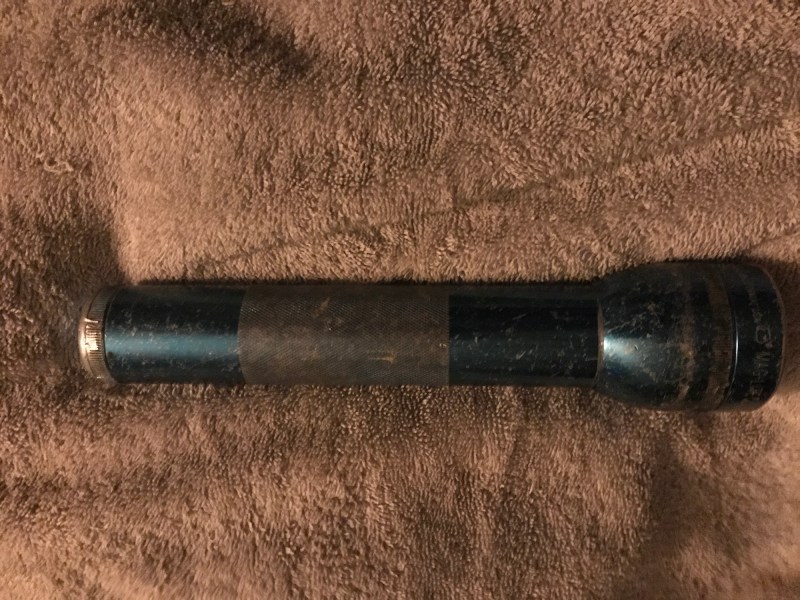
See the flashlight in the photo? It’s like a relic from a different age now, long, large, steel casing, and heavy. Four D cell batteries, like no one uses anymore, add even more mass, and there’s a reason cops once carried these, other than illumination; they make great clubs. Whatever she was on, what she might have been, or whatever she intended, I was pretty sure hitting her in the face with that flashlight would keep her off of me. Think about it. Here’s man who only wants to go home and get some rest, if not sleep. He stops to help a young woman. She’s all strung out or possessed. Suddenly, a man who has never hit a woman in his entire life, is thinking this might be the one chick that does something so weird he’s entering the realm of physical violence with her.

“That close enough,” I tell her, and she stops, and looks at me, as if she just noticed I was there.

“You can tow my car to Tallahassee,” the woman says. Her accent isn’t right. She isn’t Southern, but I can’t nail it down.

“Not about to, ma’am, but I’ll give you a ride into Quitman, or I’ll call 911,” I tell her, but there is no way in hell she’s getting into my truck.

“I’ll pay you when we get there,” and this is a demand, not a request. She’s restless, pacing, tossing her hair out of her eyes, her fingers moving like the fuses of lit firecrackers, and I plant my right foot. This is going to end poorly.

“You need to get me to Tallahassee, motherfucker,” and her voice rises again.

“Look,” I tell her, “two options, I leave you here, or I call 911, and leave you here,” I tell her, “but you see that security light about half a mile on the right? That’s the Andersons. They have three black labs. They’ll kill you if you go up there. Okay?” And I take a couple of steps back.

“Fuck you,” she snarls, but she gets back into her car.

Know when it’s time to go, and then go a minute before that time. I walk back to the truck and pull around her.

I call 911 when I get home, and they tell me they’ve just got a call from her.


Chances are, the sound from the tires is someone going home, or maybe going to work. I spent most of my adult life doing that, going to work early, coming back home late, and I hope like hell I’m done with that now. But somewhere out there, are very strange people, and maybe one of them is that young woman, eleven years older now. If she survived herself, and whatever else she was doing, she might be pushing thirty now. Maybe even older. I find myself wondering what she was doing, what drug, what substance, to change her like that, or maybe that was her authentic true self, but I strongly doubt it.

What if she’s looking for me?

The sound of tires are gone now, and in their place is the sound of that night, the engine cooling and creaking, the drip of fluids out of the car’s dead engine, the sound of insects buzzing, and the sound of her footsteps as she paced back and forth. I have to get up and write now. For whatever unknown Demons might have stalked that woman, I know which ones have their claws in me. I have to write. This is where I have to be towed.

Take Care,

Mike


Writing

Screen Shot 2020-02-16 at 8.16.49 AM

It’s been brought to my attention I’ve neglected my blog. While I once posted at least once a week or so, sometimes more, in the last couple of months there’s been more time spent on writing fiction than posting online. There’s a few things I’ve been working on:

Pine View: The story of a group of survivors in Brooks County Georgia trying to rebuild a society after the human population has been all but wiped out by creatures from another dimension. A tale of hardship, farming, and how things are going to be, if civilization ends. It’s a novel sized story, and I’ve been working on it for a while now.

Laster’s Bridge: A Bluegrass band from Valdosta Georgia heads to Canada to crash a party for the very rich and exclusive, hoping to play one good song in front of a well to do audience. A sudden storm strands them on a bridge, and a bear shows up. Deep in the Canadian wilderness, who can survive in a lonely cabin with few supplies?

Switch: A frat boy with a lot of money and toys, and a penchant for drugging women in order to rape them, gets cursed by a witch. He now has her body and her life, and she had his. How does it feel to be a poor woman in a society ran by men? He’s going to find out, and he isn’t going to like it much.

Then there’s the long range, long term projects that I’ve had around for a while that I won’t get into right now.


Overall, I’ve been writing more these days. I’ve been spending less time online than I once did. However, this blog has been operating since 2006, and I guess I ought to keep it updated more than I do.


Also, I am experimenting with the old Bondi font. It’s from the 1700’s and you’ll notice the difference right away.


To me, writing has been a constant companion. When I was a child, I read many books, as many as I could, and as I grew older I recognized good writing and better writing, versus that which might have been placed to page without any real thought. It’s not easy to write, and it’s hard to write well. Writing is work. It’s an effort to translate thought, smoothly and coherently, into words other human beings might be able to understand in a manner  the writer was attempting to convey.


In the beginning, I suspect writing was instructive, or used in accounting. This is the way that is done, or this person had that much barley put into the royal granary. But writing then evolved into this sort of thing, with one person drawing from the human mind words and thoughts that others might understand for its own sake. Writing had become part of the human experience as well as reading. If someone were to sit me down and tell me I could only have one hundred book for the rest of my life, it might take a while to decide which ones, but I could come up with one hundred that would last a lifetime.

When the internet became what it was, early on, I really and truly thought it would be a haven for writers, and those who liked to read. I never foresaw it would become a shouting match for the ignorant and the downright stupid, and popularity depended not so much on skill and content, but volume and noise.

Writing was once a revered skill, practiced and protected, by those who loved it. The keyboard has released many whose handwriting might be less than perfect, my own is barely legible, yet it has also made poor writing easier. It’s made writing errors more acceptable and I cannot help but wonder why. The tools are available to ensure writing is cleanly written, yet there are those who blow right past style and usage in the name of brevity.

When a person sits down to write, they should engage the same sort of intent used in building a bookshelf or a birdhouse, at a minimum. The edges should match, it should be level, and the design should be given some thought. Any fool can nail boards together in a manner than suggests carpentry but can a book rest upon wood and settle there with grace? Can a bird nest and bring forth generations of their kind? Writing should inspire others to read, and to write, and therefore it is very much like a birdhouse, where the egg of the craft is nested.

These days, it’s more popular to write like a drunken five year old with a substance abuse problem. Writing is use to provoke rather than to lead to thought. Writers now try to tell people what they are thinking rather than to lead them to think. Worse, in modern fiction, the leaning is towards so much dialog, most fiction might as well be written as plays. Gone are the vast swaths of text that describe in detail the setting, the scene, the mood, or the journey within the minds of characters.

Yet the New World of the internet is new. There is still time, and still hope, that a tool used as a bludgeon, might yet be refined into a stylus, to begin the new craft in freshly formed clay. There is still the dream of young people escaping not into the world of electronic games, but their own minds, where they might bring forth a generation of writing from the perspectives of those who will inherit the earth.

Nothing ever is born or dies, but is changed in some way, perhaps unrecognizable, yet it still exists, if nowhere else but the human mind. Reading will always be with us, certainly, but it has to change and be changed, by the idea that thought can be critical and must be. Writing, forever altered by the screen, will evolve also, in what form I cannot guess, but perhaps there will be a Renaissance of sorts, where there are great books written, and read, for an audience suddenly hungry for intelligent thought.

Take Care,

Mike


Abernathy

Screen Shot 2020-01-30 at 7.20.39 AM

Someone I once met bought a huge roll top desk for five hundred bucks at an estate sale. Took four grown men to get it out of the house, and back into his. The thing was a monster, a small cottage could have been built out of the wood in that desk. I’ve always wanted one, but at the same time, I’m not sure a desk, any desk, is worth five hundred dollars. No, I tend to drift towards going to estate sales at homes that might have a hardback copy of “Dune” in great condition. Or a box full of paperbacks for a dollar.

I’ve tried, really, truly, I’ve tried to stop collecting books, ever since 2006, when I gave about three thousand of them away. I had stacks of books all over the damn house, and finally released them back into the wild, giving them all to the Brooks County Library. But I’m drawn to books. They are the only source of manmade magic to believe in. Everywhere there’s a journey there’s a search for books. Who cares what a woman looks like, really, if she’s read the right books. If you can sit across from a woman at a table and she tells you that “Stranger in a Strange Land” changed her life, you can go anywhere with her, and be happy.

The hand painted sign read, “Estate Sale”, and who paints a sign for an estate sale, and that’s enough for me to go in. All of the stuff  on the screened in porch, which is dipping forward just enough to tell, and there isn’t much of what there is. Clothes, that will be eventually donated, a stack of vinyl records, mostly very old R&B and gospel, and a collection of kitchen knickknacks litter the porch. There’s a pair of boots older than I was at the time. A worn copy of some book without a cover has a tag on it reading “5 cents” and it is time to go.

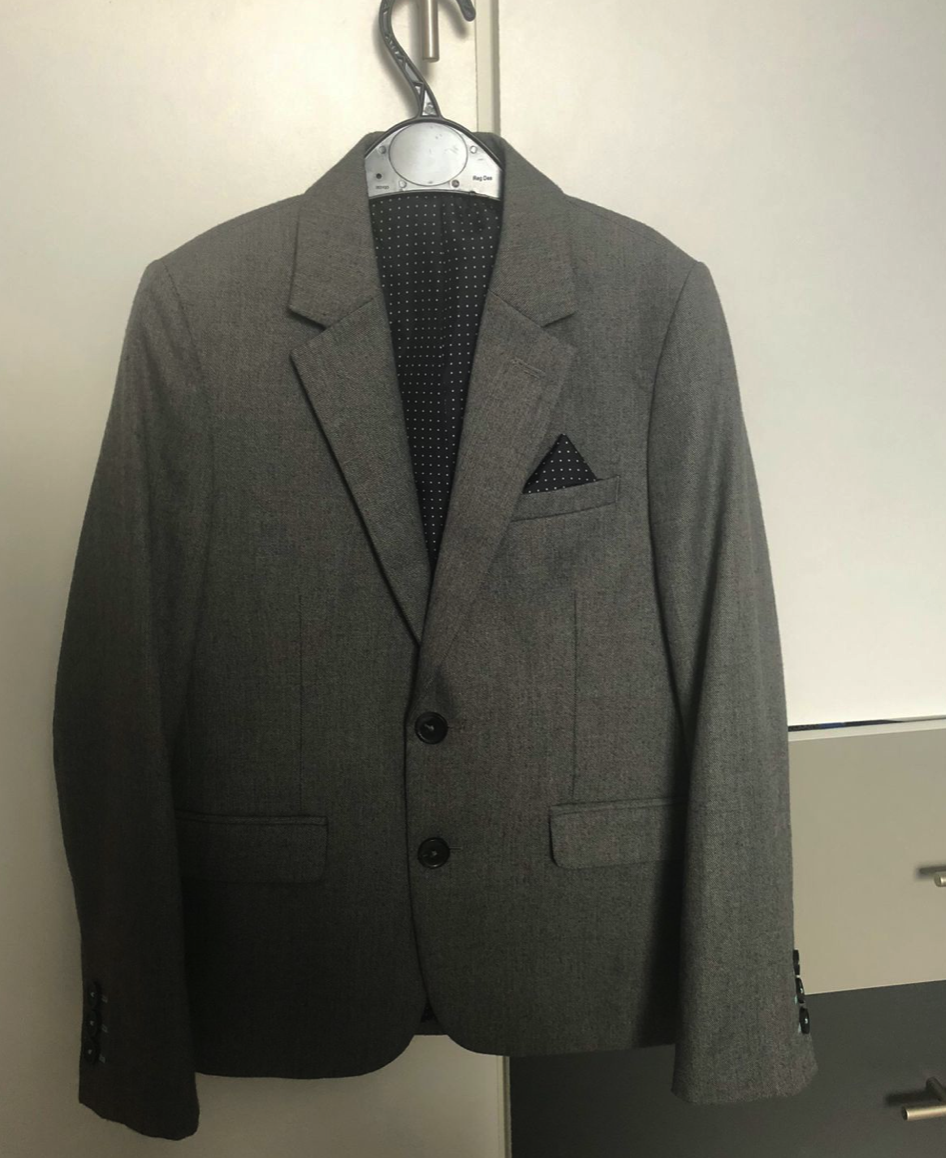
There’s a suit, and the material looks good, really good, and I stop to examine it. It’s old, very old, thin, and it had seen its better days decades ago.

“Abernathy,” the man sitting in a chair at the door says, and for a moment I didn’t realize he was speaking to me.

“Oh?” I encourage him. I shouldn’t, but why not?

“His mama named him that, wanted him to be a preacher, but it never took,” the man tells me. “She bought him that suit when he got out of high school. Gave him that suit and a bible and told him that God would speak to him.”

“Did God speak to him?” I ask.

“If’n he did, Ab didn’t hear, and if he heard he didn’t listen, Ab liked to play drums but the drums didn’t like Ab,” and the man laughed. “Didn’t have a musical nut in his sack.”

“How old was he?”

“Ab lived to be eighty, but mostly he died ten years before that,” the man stood up and stretched, keeping on hand on the door jamb to balance. “because them doctors had him doped up on pills and things. Ab couldn’t remember his own name, forgot about music, he weren’t never no good but he sho liked to listen. Had him a band he played in once, and they never was good enough to charge money. Background noise, something to hear, but nothing to listen to a’tall, is how I called’em.”  The man sat down and stared at the wooden floor. He could hear the music now, through much younger ears, and even though it wasn’t great music, or even good music, it was something that glued his past together.

“They played in this very house, had all the drums jammed in so tight Ab could hardly move, not that it hurt’im none. They played loud, and we drank to help, and it did some, and he always wore that suit. Made him look like he was gonna go to a funeral for the music, I said that one night, and everybody laughed so hard Ab stopped playing, and he never picked up a stick again. Never wore it again, that suit, never put it back on. Took his drums, and all that shit that went with it, to the pawn shop, and drank it away in less than a week.”  The man stared back into the house now, and I could hear it; terribly play music played far too loud, for drunk friends who were just trying to find an excuse to be there.

“Folks kidded Ab, they were mean about it, and said he once got arrested for playing music too loud, but the judge had heard Ab play, and said it wasn’t music,” the man laughed hard at that, and slapped his knee. “Ab took it hard, he did, he ain’t played a lick since that night, and he ain’t listened to no music like he once did. But the day he died his ex come over and played them records over there one by one, until Ab passed. Then she put’em down where she found’em and she walked out, again, and didn’t never come back no more.” The man stopped speaking for a while, and looked up, to see if I was still there.

“Good woman, Dorothy Ann was. Ab and her had two young’ens and they didn’t grow up to be preachers either. Both dead before they was old enough to drive. Wild things, went off and stole a car, wrecked it and burned. Dot’Ann done left after that. Came back to see Ab die, but it was more than that. She saw the last of her babies that day, too, both of’em spittin’ image of their daddy.” The man was staring at the warped and twisted porch wood now. It was time for me to leave, and I knew it.


End.

Cold

Back a few years ago, we had a period of cold weather that lasted for about a month. The pond had ice on it every day, at least in the parts shaded by trees, the pipe in the pump house burst, and it was ungodly cold all the damn time.  This week, we’ve had three days of freezing weather, twenty-eight degrees as a low, and it looks like that’s it for the month of January, 2020. The gnats are back, the mosquitoes were really bad last week, and there’s grass high enough to mow in the yard right now.

The middle of last May was incredibly hot. Not just warm, but triple digit heat in the day, high humidity, and night that were unbearable without AC.


I woke up at four this morning, couldn’t get back to sleep, and decided to get up, and write. Since I retired, there’s been this reoccurring theme from some people that we humans have to have a schedule, and we have to have a routine, because that’s the sort of animals we are. But I haven’t one in over three months, and I’m not looking for one, either. I like the idea of getting out of bed when I can’t sleep and writing. I’m not late for a damn thing, am I?


If I don’t go out with the dogs they’ll U turn, and pretend they peed on the grass, and right after they eat they’ll really have to go. So I go out, in freezing weather, to make sure they pee. They’re all curled up tight and sleeping again right now. But the stars were incredible in the cold early morning darkness, and an orange crescent moon was slung low in the southern sky, barely awake. I couldn’t get a decent photo of it, I wish I had either the equipment or the knowledge for such work, but I rather hone my writing skills than learn photography this morning. The urge to write right now seems urgent.


Decades ago, a few years before I took the job that I would retire from, I worked as a circulation manager for the Valdosta Daily Times. One night I was riding with one of the carriers and saw the moon, a low slung crescent in the night sky, and that was all that mattered at the moment, to see the moon. It’s important to pay attention to what the moon is doing, what the moon is saying at the moment, and acknowledge that everyone on Earth who has ever lived, and had the gift of sight, has seen the same moon. It’s a commonality of humanity. It should be. We should all take time to moon gaze, and it see it as an undying memorial to our endurance. The same magic that early humans felt, long before we landed there, I feel when I look at the slightly orange crescent caught in the branches of the trees around the pond. The magic seeped into my bones as a child and never left me. I feel sorry for those people who never look up, never stop and stare, and never feel the moon.


The crescent will be smaller tomorrow morning. It’s waning, and soon will be a sliver, or a smile, depending on the position. There will be nights of near total darkness and the stars will shine brightly, then the moon will return, again. It matters not at all if I am here to see it, for many more people who stood and enjoyed the view are not here.


Yesterday, I noticed it was six in the afternoon, and not quite yet dark. The days are getting longer, and they have been since the last part of December, but only now has it become noticeable. The sun is also rising further south than before, and now, after enjoying the sunlight reflecting off the moon, I see the eastern sky begin to brighten somewhat. Out in the ocean, on some boat, someone is watching the sunrise, but I must wait awhile yet.


For some reason, I cannot explain to you, a memory summoned to the surface, of a young woman I knew, who liked being in relationships, but also liked cheating. Her boyfriend caught her, confronted her, and she denied it, knowing as long as he didn’t actually see her doing anything, deny, deny, deny. They were in bed having this conversation, and he held her down, handcuffed her hands behind her back, duct taped her feet together, and then tossed her into the trunk of her car. At that point, she was truly afraid he was going to kill her. He took her out in the country, went down a field road, and dumped her on the ground, and drove away. It was below freezing and no matter how loud she screamed, no one came.

An hour so later, he came back, brought her clothes with him, uncuffed and untied her, and he drove her to the police station and got out of the car, and told her he was walking home. She sat there a while, then picked him up, and they stayed together for years after that.


One night she told me that while she was in the field, her naked body lying on the freezing ground, and she was wondering which worst case scenario might occur and cause her untimely death, she looked up at the sky and realized the moon was new, and the stars overhead looked incredible. And for a brief moment in her life, despite the fact that truly believed she was going to die, in one fashion or another, she realized that in that one moment, she defined her ability to rise above her own mortality.


I had never had anyone tell me anything more perfectly beautiful in my life.


Take Care,

Mike


Switch, and Where I’ve Been

It’s been a while, I realize that, and a lot has gone on. I’m retired. As of October the first, that was it. I no longer have a full time job with a steady paycheck and health insurance. Pretty good thing the health insurance carried over; I was hospitalized with perforated diverticulitis a month ago and underwent major surgery to have part of my intestines cut out and the gap sewn back together. I no longer have the whole nine yards. I’m a foot short.

I spent the first month of retirement in a state of I’m-on-vacation mode, and it just seemed like that. It didn’t really start to sink in that by career was over until November. But, by the middle of November, I knew something wasn’t right inside of me, but I thought it was just my hernia acting up. I could not have been more wrong.


The good thing about all of this, and you have to think it’s all good, is being infirm has forced me back to the keyboard. For the last two weeks I’ve been working on a short story and got it finished. I’ll rewrite it at least once, maybe twice, but I like the story, and I like the ending.


“Switch” is the story of a nineteen year old frat boy from a wealthy family. He’s going to college in Valdosta Georgia, and has the world at his feet. Conner is arrogant and predatory, and he knows he can get away with doing anything he wants to women. He preys on the wrong woman, who happens to be a witch. She’s been stalking him for a while, knows who he is, and what he does. Conner tries to rape Glenni by drugging her drink, but she’s already slipped a potion into Conner’s beer. The world goes black, and Conner wakes up in Glenni’s body, and in Glenni’s apartment. She’s switched bodies and worlds with Conner, and now he has to live like a woman working for tips at a bar, while Glenni goes forth to live as a frat boy in college. She looks like she’s in her early twenties, but Glenni is eighty-five. The frat will never be the same.

Meanwhile, Conner is freaked out. Without his cell he can’t call anyone he knows, and Glenni has warned him she’s gotten a restraining order to keep him away from the frat house. Besides, no matter what Conner tells anyone, he’s still in the body of a woman. No one is going to believe him.

Things get worse. Conner has no idea how to put on makeup or how to deal with his hair. Glenni’s hair is a black mane of thick curls that have a mind of their own. His first night at work at the bar ends with Conner getting fired, and then sexually assaulted in the parking lot by a customer who Conner pissed off. Conner discovers no one cares. So what? So a man stuck his hand down your pants and he squeezed your breasts? Minor stuff, kid. No one cares. Conner is stunned by the indifference. But he remembers he’s done things like that, many times, and nothing ever happened to him.

Rent, bills, food, a flat tire he’s unable to fix by himself.  Glenni’s left him with an ancient cell phone, a lap top that’s ten years old, and a bank account that’s nearly dry. There’s food in the refrigerator, but it’s healthy vegan type stuff and a very little to Conner’s liking.


Conner gets help changing his tire from a guy living in the apartment next to his own, and one part of the curse Conner never considered kicks in; Conner isn’t just a guy stuck in a woman’s body, oh no, Conner is a straight woman, with a guy trapped inside of her. After a few beers and a watching football with his new pal, Conner’s body starts interacting with the pheromones in the air. And true to so many stories, just as Conner heats up, his period arrives, and because he’s never really thought about what women go through once a month, every damn month, for about five days, Conner handles it as poorly as you’d think.

I’ve had some very interesting conversations with a couple of women I know about how it feels to be attracted to a guy. Like the first signs, and then as things heat up, the first real issues with the female body and sexual attraction, especially when the woman is trying not to be attracted to a guy. It’s been very educational.


Conner, despite the fact that he’s a straight guy, falls for the boy next door, and terrible things happen. Well, terrible for Conner. The guy next door simply leaves.


Glenni shows up and is somewhat tickled at what’s happened to Conner, but she’s also concerned. The curse wasn’t supposed to go this deep, or to change Conner’s sexual orientation, but curses have a mind of their own, sometimes. She’s unable to change anything about the curse, because the very essence of the spell is that Conner has to learn how to break it himself. Considering the mess Conner has made in a very short time, she now doubts he will survive as a poor woman in South Georgia.


Will Conner be able to pay his bills? What do very poor women do when they have no money, no job skills, and they have no real friends or family? Conner finds out.


In the end, will things switch over? Hmmm, we’ll see.


Take Care,

Mike