Christianity Is Dead


Once upon a time, in a land called Amerika . . .
It was a wild gamble, and one with consequences that were easily foreseeable. Back in the 1980’s a sudden shift in the political winds saw the Republican party actively courting Evangelic Christians. It was a ploy, a false woo, but the rewards offered were, seemingly, great for both sides. The politicians would get votes, and the Evangelics would have men in office, very rarely women, who would change the laws of the land to more reflect the values of those who voted in God’s name, Amen.
Abortion was the hot button issue. It didn’t matter, at all, that there were far greater issues facing the country. The Republicans farmed this issue, they mined it like it was gold, and it paid off, even though they never delivered on their promise to end abortion. They truly didn’t want to, because the Republicans believed in the sanctity of life, unless it was their sixteen year old daughter, or their mistress, who needed to get rid of a pregnancy. But to stand up in front of a crowd and call abortion murder was a sure way to get elected. And bring in money.
Republicans took a hit, and a pretty severe hit, when they became the party who opposed gay rights. Their efforts to criminalize sexual orientation backfired, and the Evangelics should have seen the future in this issue, but they did not. They should have realized that mixing politics and religion was an anathema to both the Constitution, and the free will of Christians, but they were blinded by the power their candidates held, and there were seduced by the amount of money that could be raised.
Power corrupts.
Once the Christian Church in America began to act as a Political Action Committee for the Republican Party, they left the path of righteousness. Instead of following the teachings of Christ, they began to following the whims of the men who used them like blind whores, offering change in abortions laws, and opposing gay marriage but emptying the coffers of the churches. Feeding the poor, clothing the needy, taking care of children, healing the sick, and all of the other actions of Jesus Christ were set aside in the name of doing the bidding of the Republican Party.
became the religion of those who sought personal wealth and power. Mega Churches sucked the tithes from the followers, and billionaires began to pop up in the pulpits. They preached against humanitarian actions in favor of political fervor.
Churches changed to media centers, replete with wide screen televisions, surround sound speakers, wifi, ATM’s in the lobby, Starbucks in the parking lot, and at some churches, pledges were taken from church members to donate a certain amount each month, to keep the parking lots paved, the air conditioners running at 65 degrees, and to keep the private jets in the heavens.
But Prosperity Christianity failed many people for many reasons. It failed the poor, it failed people of color, it failed the gay community, it failed anyone who didn’t speak English well, and it fail to address the hunger for a religion that fed the soul, not the bank accounts of the men who ran the churches.
When Trump was elected, it was a sign, a bright orange neon sign, that Christianity could be whored out for nothing more than the promise of oppressing of minorities, banning abortion, and setting the world right again, for theocracy. Trump enriched corporations and gutted environmental laws, trampled on the rights of anyone not white and male, and in the middle of a peaceful protest, he gassed people so he could stand in front of a church, a bible raised, both upside down, and backwards, for a photo op.
But even before Trump, people were leaving the church. People began responding “Spiritual not religious” to polls and surveys. Paganism began a comeback, with the promise of a more ecologically friendly, and earth based belief system. Trump’s high jacking of faith has had a scorched earth effect on the Evangelics. His crassness, his lies, his lack of a moral compass, and his disregard for civility has driven decent people away from the churches who advocated for his election.
I told you this would happen. I told you in the 1980’s that the separation of church and state protected both sided from one another. I said, many years ago, that once religion and politics mixed, it was like stirring manure with cookie dough. No matter how little is in the mix, it still ruins the end product. But now, there is more manure than cookie dough, and there is no way to get it back out again; there are far too many people in the church selling those cookies. And far too many people buying them.
Christianity as most of us once knew it, is dead. In its place is convenience store religion, something that is a little more expensive, but it doesn’t require much time, and there isn’t an expectation in the quality of the product. It’s a cheap plastic Jesus on the dashboard. It’s McDonald’s for the soul. It’s bad for the environment, for families, for the poor, for the downtrodden, and basically, anyone who once believed in the Redeemer.
Take Care,
Mike
Halloween 2019 The Flood Part Seven

It took four long hours to get to New Orleans, but somehow, they lurched and sputtered their way until they reached the city. All three women were slightly seasick from the effort. They took a very long lunch and decided to keep to the back roads, and out of sight as much as possible.
“Where are we going now?” asked Paula.
“We really don’t know,” replied Ana, “we have to make it back to the apartment building where we once lived. We can sense it, almost smell it, but at the same time, until we are actually standing in front of the place it all began, we won’t know that we’re there.”
“Let’s take a right at the next light,” Bella offered.
“The last time we were there we were infants escaping from a flooded city with our parents, in rubber boats. There were so many people trapped by the water, and so many people who lost their humanity and some who lost their lives.” Ana said.
“Stop!” Bella said loudly. “I remember that building.”
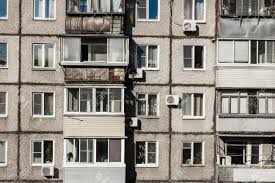
The edifice was a decaying monster at the edge of town. Windblown and battered by storms, it had never been repaired and never been torn down. The windows were boarded up, but the barricade that shuttered the front door had been removed by the homeless people in town.
“We sheltered in the third floor of that building until the Red Cross came. There were many people who were there, and some never left. They thought it was safe, but the water rose.” Ana whispered.
“I remember,” Belle said.
“Then we are close?” asked Paula.
“Very.”
They entered the lobby of the building as rat scurried away and pigeons cooed overhead. The first three floors of the building had collapsed into rubble, and going further meant climbing over the debris.
“Something was wrong,” Ana said. “When we arrived here. Something was wrong. Someone was missing.”
“I remember,” Bella said.
“Our parents where here, Michael was here,” Ana looked around. “We stayed on the fourth floor, it was crowded, people were screaming and crying, and it was dark. Some people had flashlights.”
“Yes,” said Bella.
“You should not have returned to this place,” a man’s voice called from above. “You should have forgotten everything, and stayed away. This is New Orleans. The dead are buried above ground to keep their souls from leaving. Everyone who dies here stays.”
“Lies,” Paula called back. “Lies and more lies. You cannot frighten us. If you had more than your voice you wouldn’t bother to speak.”
“I was shot in the head while trying to get my baby’s clothes out of our apartment. They called me a looter. I was thrown into the water and my family never heard from me again.” The man said, and they could hear him making his way down, jumping from floor to floor. “Now people like you who have lost so little return to find what? Justice in some fashion? The pieces of a puzzle?” the man stepped out into the light and all three women recoiled. The top part of his head was missing.
“Why are so many trying to stop these girls from coming here?” Paula demanded. “Why is it so important for them to stay away? Who is afraid of what they will find? What will they find?”
“’Lies and more lies’” the man laughed. “You know what they’re looking for. They know. Everybody knows why they’re here. The dead don’t leave this city. The drowned don’t drift downstream. You brought them here to find out the truth, but what is the truth? I got shot trying to steal a widescreen, or I got shot trying to help my people. What makes you think the dead are more honest than the living?” He stepped back into the shadows and backed away.
“You girls go on back home now,” he called as he slipped away. “You know the truth. Live with it. I got to live with the idea that my people won’t know what happened to me. You don’t go back to the living once you’re dead, you know better than that, over here. They got to move on, and I know I should too, but there’s something I ain’t done, maybe this is it. But I was helping my people, I was getting clothes for the baby. I was doing right, but after I got all I could there was more just sitting there. I heard the voices of those that didn’t make it telling me I could have it. They knew where the snipers were and led me into the sights of those Army rifles. Yeah, yeah, most people that linger are trying to make things right but how they see the world set right ain’t like it ought to be, and I’m dead proof of that. You don’t belong here. I don’t either. Maybe if you leave I will, too. But you know the truth. You know why this is happening.” The man stopped speaking and they were about to turn and leave when he continued.
“Don’t hold up living because you remember the dead,” he told them, “that’s why we never go back. That’s why you ought’a leave now.”
They made their way back to the car but Ana stopped when she got to the door. “I think we should walk from here. It’s a few blocks, but we need to let them know we aren’t afraid. We go into this fearless and it will make them leave us alone. I’m through running. I’m done being scared of what was and what might happen. Let them come. Let’s face them. Let’s go find out why this is happening, and who is behind it all.”
“Okay,” Bella replied. “I’m with you.”
“I think it’s a mistake, but from what I’ve learned today, not going in like this might be worse.” Paula replied. “Let’s roll.”
End seven.
Halloween 2019 The Flood Part Thee

“Apparently little Miss Cheerleader decided to try Bella’s advice,” Ana began, “and when she took the Black Cohosh, she took about ten times as much as recommended on the label and got sick as a dog. That may or may not have caused the miscarriage, but she was only three weeks in so there’s no way to tell.”
“That’s going to be a difficult charge to get you kicked out of school for, certainly,” Paula said, “so I feel like there’s more. I’ll get tea, this is going to take a while, isn’t it?”
“Yep!” the sisters said in unison.
“Someone burned a symbol into the door my dorm room, Paula,” Ana said as she sipped the tea.
“It’s a symbol that isn’t well known, and only three people know what it means,” Bella said, “four now that we’re telling you.”
“And we have always wondered why Michael choose it.” Ana said.
“Yes, but what is it?” Paula asked.
“It’s the symbol for the Quaternary knot.” Bella told her. “Michael said that when we three were together we began one, which meant there were really four of us, but now we’re wondering if somehow you’ve been pulled into this.”
“You think Michael put the symbol on the door?” Paula asked.
“If he didn’t there wouldn’t be anyone who knew its meaning to us, a random act of vandalism seems unlikely,” Ana replied.
“But there’s nothing on the security feed.” Bella said, “And they’ve got security on 24/7 in that place. Someone smelled smoke and they found the symbol on the door a few minutes after that.”
“You two were here,” Paula said, “and we can prove it!” She announced this with no small amount of authority. They all laughed, but the idea that someone had burned the symbol into the door without being seen bothered each of them. Paula headed to bed after tea and left the sisters to themselves.
“You dad will hear about this, and he might decide to come get you.” Bella finally said. “Let’s get the rest of your stuff and leave.”
“And abandon school?” Ana shook her head. “Get jobs waiting tables and scaring the fuck out of the locals until one or both of us winds up in jail? No thanks. We have to stay. No matter what else happens we still have to operate in this world.”
“Do you think your dad might have done it?” Bella asked. “He might have seen Michael use the symbol before.”
“No, dad is more direct,” Ana replied as she got up to pace. “He’d use a hammer not a scalpel.”
Without talking about they rose and left Paula’s house and went to the dorm. There other girls were already whispering about the sisters but they were accustomed to that. No matter where they had lived, who they were or what they were was always the subject of debate. They looked at the symbol on the door; it looks like someone had taken a very hot piece of metal and pushed it deep into the wood, branding it.
“Looks like Michael’s work,” Ana said.
“Still, does he know enough to come and go without being seen?” Bella asked, “he’s always respected power but he’s never used it.”
“He knows we’re here,” Ana said. “He’ll find us. We have to be ready for whatever condition his mind is in.”
“Or not in,” Bella smiled grimly, as she traced the scorched wood with one finger.
“Let’s go,” Ana said.
The walk back to Paula’s led them past a graveyard, so they went in, without a word. Ana pulled her cover out, and spread it over the ground, while Bella lit four small candles. They shuffled the deck of cards, passing the cards back and forth between one another, and finally laying the ten cards out, and waiting. Somewhere in the night, a bird flew, an owl or some other creature that hid from the day.
“The Protector,” Ana said, as she turned over the card, “we’re being watched, but we’re being watched over.”
“Good, very good sign,” Bella added.
They waited, and finally they heard the sound of a branch falling, and Bella turned over the next card.
“Heath passing, from someone near, but not death,” Bella said.
“The card is influenced by the next two,” Ana said, “but we must stop now. Someone is coming.”
Bella blew the candles out and they heard a man’s voice cursing. “Fucking witches!” he called out. “Where are you?’
The man stumbled in the dark and hurt his leg, “I better not lose a scholarship because of you two cunts!” he yelled.
He saw a brief flash of light, and then saw a candle being lit. He charged towards the light.
“Oh there you . . .” he stopped when he saw the candle resting on a tombstone, with an empty glass jar lying next to it.
“Your mind is that jar,” Bella called from darkness. “You will forget things. You will not remember things as you should. “
“Fucking whores,” the man shouting, “I got something for you both. Bev says you told her she was pregnant and gave her poison to kill my kid.” The man laughed. “Maybe I ought to pay you for that one, but I can’t have people saying witches killed my kid.”
“What you hold most dear will now leave you, and it will go slowly, like water evaporating in that jar. When the time comes for you to calm your anger, and accept your role in this, then you will be allowed to apologize to us, and we will lift the curse. I should warn you that if you wait too long, some of it may longer for a very long time.”
“What in the fuck is that supposed to mean?” the man asked, but he sounded less sure of himself.
“Look up the phases of the moon,” Ana said. “when the same phase is active again, in 28 days, return here. You will bring an offering. We may release you.”
“I’m the backup quarterback for the team,” the man shouted, “I’ll find you can I’ll share you with my friends!” But there was no one there to answer him. On his way back to the dorm he forgot where he lived, but it came back to him, eventually.
End part three
Halloween Story 2019 The Flood. Part One
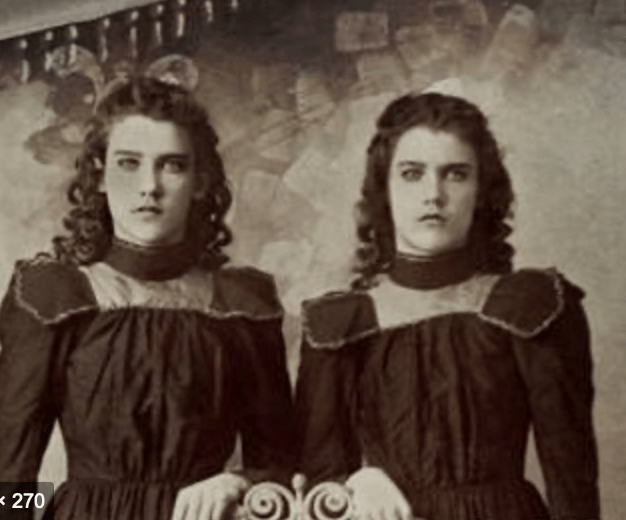
Bella rode the elevator to the sixth floor of the dorm, where her sister was staying. There was a temporary visitor’s pass in Bella’s back pocket that had a chip in it that would track her movements, but Bella didn’t need any devices like that to know where Ana was at any given moment; she knew. They both knew. They had always known and they would always know. The fact they had been separated for four years didn’t change anything at all.
“Room six-oh-one, first door on the right from the end of the green hallway,” the smiling woman at the desk had told her, and Bella smiled back. “Are you her sister? You look just like her. I live next door.”
“Yes. Thank you,” Bella had said, and headed to the elevator.
The door was green, and Bella waited until the lock clicked. Ana had known Bella was there, without a knock or a phone call or a text or anything else. But Ana hesitated, stood there and tried to catch her breath, Bella knew that, too. The lock clicked, finally, and Bella opened the door, and embraced her sister.
Four years, three months, a handful of days, a few hours and some minutes, a lifetime now. “Where is he?” Bella asked.
“If you can’t see him you know I can’t either,” Ana replied, not breaking the hug. “He’s gone from us. There’s hope he will return now we’re together again, but you know they aren’t going to leave us alone.”
“We’re adults, we’re both living out of state and away from all of them,” Bella stepped back gently and admired her sister. “You’ve been working out, eating well, and sleeping on a regular basis.”
“You have not been doing any of these things but you look beautiful,” Ana replied with a laugh.
“Your parents?” asked Belle.
“Mom has early onset dementia.” Ana looked away. “Dad is well, but he has the University’s wifi plan that allows him to monitor me in this room to a degree. Yours?”
“Still alive and still angry.” Belle said.
“I’m sorry.”
“I have a place,” Belle replied.
“Yes, above a bar? Next door to a strip joint? Under a bowling alley?” Ana laughed again.
“No, it’s an old house with an apartment,” Belle said, “it’s secure. The woman who rents it is one of us, kinda. She knows who I am.”
“Does she know the consequences?” Ana asked. “Have you got a car? We need to move me out, mostly, but I’ll study here, to keep the internet thing going.”
“No, I think Mrs. Gerard is a latent without any training. Paula, that’s her first name, is one of those older people, I think she’s in her sixties now, who has retreated from what is, and years for what could be.” Belle sat on the bed and leaned back. “This thing is not comfortable.”
“Better than the floor,” Ana replied.
“Not as I remember it. But yes I have a car.”
They stepped into the elevator and as the door closed three giggling young women entered with them. Ana smiled and she knew Belle was looking at their reflection in the mirrored door as they rode down.
“You two are twins!” One of the girls, maybe she was stoned, thought being in an elevator with twins was hysterical.
“You’re pregnant,” Belle told the girl, “from a week ago Saturday. You don’t love the man but you aren’t willing to let him go yet. Take Black Cohosh, as a tea for three weeks, fast three days before you begin, and start before another week has passed, if you want to lessen the side effects.”
“Wha-what?” the girl stopped laughed and the other two fell silent.
“My sister does this as a kindness,” Ana said, “and if you do as she says then you’ll suffer less than if you do not. Ignore her manner and mind her wisdom in this, please.”
The doors opened and Bella took Ana’s hand and led her out. The girls hesitated and followed them.
“Are you a witch or something?” One of them called out.
“You were last time but they hung you for it, and it frightens you,” Ana said, “but there is still time.”
Paula took an instant liking to Ana and Ana appreciated the fact there was no awkwardness that existed with some older people. Paula kept a garden, which Ana was delighted to inspect, and found herbs and vegetables growing in neat rows. The apartment was attached to the house, but in the upstairs part, and there was a stairway outside that would eliminate Paula knowing when they came and went. Paula also kept a huge black cat named Brody in the house, and Brody wasn’t sure about either of the young women yet. He lay on the top of a bookshelf, flipping his tail and ignoring them both.
“So you two are twins?” Paula asked then laughed, “I’m sorry, I bet you’ve heard that all your lives, haven’t you?”
“Yes,” Ana replied, “but we aren’t twins, we’re not really sisters at all, not in the way most people think of it. We look very much alike, but at the same time, that doesn’t have anything to do with genetics.”
“Sounds very, uh, mysterious,” Paula said. “You both have referred to the other as ‘sister” tonight.”
“We consider ourselves to be sister of a union much stronger than blood.” Bella said, “it’s very unusual. We’ll have to talk more about it later, but right now, is it okay if Ana moves in? She’s the quieter of the two of us. You know I don’t have much money, and Ana less.”
“I could use an extra hand in the garden,” Paula laughed. “And you looked very interested in what I had planted, Ana, will you garden for rent money?”
“Yes ma’am, I will.” Ana smiled at the thought.
Later, they lay in bed, both naked, but nothing sexual about the embrace. They had been sleeping like this since they could remember, and they could remember many things. Ana sat up and said, “You disagree with me telling Paula.”
“I disagree with you not telling me first,” Bella said, “but it doesn’t matter. Your judgment was always better than mine.”
“You have what we need to begin?’ Ana asked. “We should soon.”
“Almost.” Bella said. “First, we need to make contact, and see if anyone is there. If not, we search.”
“And if someone is there?” Ana asked.
“We wait until we find Michael, and we bring him in.”
end part one.
The Woman on Treadmill #8

“I fell asleep during sex once,” she said in the dark, “and when I woke up I realized he hadn’t noticed.”
After twenty years of marriage, three kids, and seeing one of them off to college and the other two in High School, she and her husband sat down on night and divided the assets. She got the house, the place where the kids would all return to, like ghosts with growing pains, who were the first to notice their family was dying. She had been an eighteen year old, right out of high school and he was the boy she fell in love with. They spent four years in poverty with two kids until he graduated from college with a degree in business and he did well for her, and the kids. She wanted the big house by the man made lake with the man made cookie cutter subdivision, the soccer mom thing, and that was exactly what she got. It was perfect. Or at least it looked perfect, and that was, after all, enough.
They both agreed, no dating until everything was final, and no bringing home one night stands around the kids. It was a surreal conversation she told me, because it had been nearly twenty years since anyone but her husband had seen her naked. After three kids and twenty years of going to the gym a few times a year, she realized there was a lot of work to be done before she could think about a lover that didn’t have a wall charger.
He was cheating, had a girlfriend, she was certain of it, but he was discreet as hell, and never brought it home with him in any way. He was a good father, and a good person. They still went to church together, still socialized with the same people, still attended school functions as one, but that was going to end, and this was his way of telling her he would be taking someone else to those events. She wanted to care. She wanted to be hurt by being replaced. She wanted to feel something, rage, anger, sorrow, anything, by losing this man, but there was nothing there at all.
She had cried, silently, alone, while sitting in the minivan. It had been their first family car, twenty years ago, and it had lasted five years, but it was time for an upgrade. But this vehicle had been solid and reliable transportation for all the kids, even the newborn, her last, she knew, and this car bore witness to her transformation from a young woman to a mom. He never noticed the tears or if he did, knew better to ask unless he wanted to hear about it, and he didn’t.
They approached child raising as two people committed to crisis management. The constant pressure of food, clothing, waste, entertainment, training, education, and the limited amount of time in each day left them both seeing the other as a co-worker, or wait staff, someone friendly only because that was part of the job. It wasn’t always like that, she said, her voice catching on words she had never spoken aloud before, but it sank, slowly, no matter how hard they bailed the water out of the boat. Bills, school programs, sleep overs, the never ending need for more stuff and more room, and suddenly, he was sleeping on the bean bag in his office a couple of times a week, and to her this was glorious. She had her tubes tied after the last child, and he had a vasectomy. She knew what it meant, but she didn’t care anymore. Tying her tubes mean she would never have to go through this again, after this kid was old enough, her time as a mom to little kids would end. That was something she looked forward to, with glee, and dreaded.
Emily, the youngest child, a strange creature who entered high school with perfect grades and a love for Saturday morning cartoons, was a year younger than her classmates, jumped two grades, but light years ahead of everyone. She was the one who sat her parents down and said, “Fix it or fuck it, but don’t fucking rot for it.”
But it was already gone, and it had been. They sat down one rare night with all the kids gone and drank two bottles of wine. They split up assets and decided he would leave, take his truck, take the guns, except her pistol, leave the two dogs and the cat, take the boat, please for the love of God take the fucking boat, and then it was a question of small things, who got the good cooler, and who would get the nice plates. He was a nice person. He would get a place of his own, big enough for the kids to come and go, and he wouldn’t take anything she needed, he would get new stuff, and she was good with that. The old stuff comforted her. She didn’t like change, and realized that was part of the reason he was still in the same house as she was but then suddenly he was gone.
Her friends threw a party for her. It was fun. She had forgotten fun. She laughed and drank too much, and listened to women who had gone through this process describe what sex was like the first time after the marriage was gone. After everyone had left she looked at the woman standing naked in front of the mirror and wondered if she could get a man drunk enough to sleep with her. It was time to start training her body to do more than drive a taxi for the kids.
The younger women had perfect bodies and merciless souls. All of them were molded from the purest clay, and some of them, even those who were still in their late teens, had implants. Or at least they looked like they did. Most of them shaved their pubic hair, and she still looked like she was giving birth to a wooly mammoth. There was spin classes, and boot camp classes, and Yoga classes, and she threw herself into fitness as an escape from her life, which still required her to be the mom, but now with one kid who had his own car, and another who was independent of all things human, she had time. But she didn’t know what to do with those hours that occurred when she was alone.
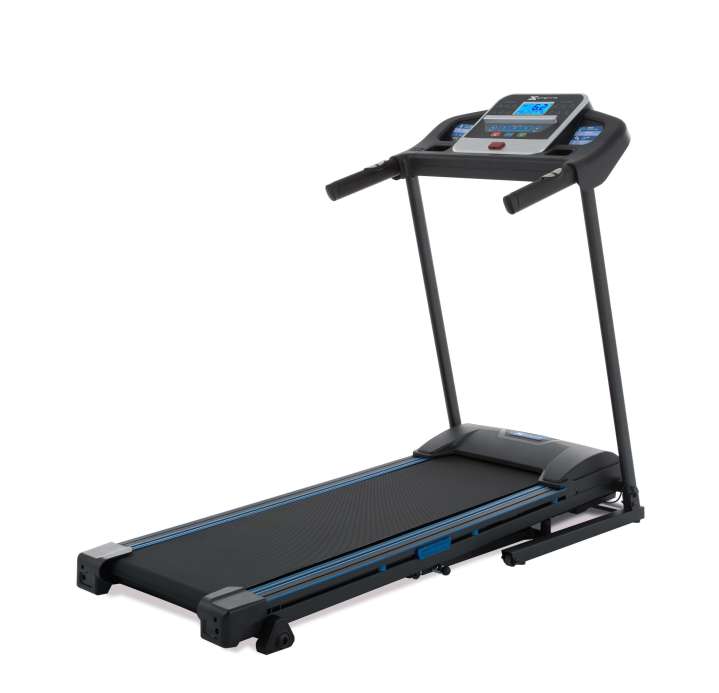
“I think you have my keys,” she said to me. I was on treadmill # 8 and she was standing here beside it, looking a little embarrassed.
“I have your keys?” I asked, slowing the machine down to a walk. “Did you leave them at my house last night?”
“God no, I mean I think they’re in the cup holder of the machine,” she laughed and blushed.
I looked in the cup holders. No keys.
“You have beautiful eyes,” I told her, “and a good laugh.”
“Thank you, may I have my keys?” she said, but she was smiling.
“They aren’t here,” I told her.
“You’re messing with me,” she laughed, “come on, I have to pick my daughter up.”
“Here,” I said, and I cut the machine off and stepped to the other side. She got on the treadmill and picked my keys up but hers was not to be found.
“Are you married?” I asked.
“No,” she said, looking at her left hand. The smiling stopped. “I have to go.”
“I’m pushing forty,” she said the first time we were alone. “I’ve had three kids, eaten junk food for dinner three times a week for twenty years. There’s a dozen women in that building who are my age that look a lot better. You’re going to get scared off once you see me nude.”
“So you’re telling me I’m going to see you nude?” I leered at her, and she laughed hard. More than anything else, she told me later that night, she missed someone who could make her laugh.
“I met my husband’s girlfriend at his place one day,” she said, the flickering candle the only light in the room. “She wasn’t the young bimbo type at all. I feared that. I was afraid he’s go out and find someone who would take him for a ride. But she was about my age, and had been around the block once or twice. It was a little awkward, to see the two of them sitting together on the new sofa, and I could tell she had spent the night. She was really civil to me, very well mannered, but this was her turf, and that was her man now. She asked me if it was okay if she got Emily a leather bound set of Harry Potter for Emily’s birthday, and I told her I thought it was perfect. That was when I decided to start looking for someone, too. If he could do that well, hell, there was no telling who I might find.” She put her hand on my shoulder and kissed me.
“I’m moving,” she told me a few months later. “My oldest got a job in New Mexico, and his wife is pregnant. Emily is going to stay. It’s time for me to get out of this part of the world.” We went out for dinner one night and then went back to her place, which was filled with chaos and packing boxes. Her ex had gotten married, and finally, she felt something, something akin to loss, something that was a sharp stick, and it hurt.
Take Care,
Mike
I Fought the Lawn and the Lawn Won.


Last year, we had that damn hurricane late in the Summer, and I never really got around to picking the yard up so I could mow again. Then it rained every other day for nine five months, and mowing just wasn’t possible. And then I discovered my mower was dead, and of course, that made it impossible. How long this might have gone up is subject to debate, but Mom moved in with me about three months ago, and her concerns about the height of the grass began to turn into concerns about the altitude of the grass, and whether or not we might lose a dog in the jungle.
And so it came to pass I rented a push mower and on one of the hottest days of the year, stepped out into the bushland, and cranked it up. Let’s face it, even on the very best days, mowing is tedious and mind numbing work. With the mercury rising steadily and the yellow flies attacking, it was pretty hellish just walking off the porch. Yet what is is what must be, and the task at hand, however hard, was just merely hard, not impossible.
Even though it flooded here from last September until two weeks ago, there was more dust than I could believe possible. The grass was tall, but it didn’t seem overly tough. The last week or so saw temps in the upper 90’s for most of every day, and triple digit heat for three days in a row. Even though I got started before seven in the morning, the dew was all dried up, and blown away. It was like mowing dead grass things were so dry.
The yellow flies seemed oblivious to the cloud of dust. Normally aggressive to the extreme, they were even worse yesterday. I actually plucked two of them off my face as I was mowing. They tried to dig in and bite even as they were crushed to death. I took a couple of hits on my neck as well. I look like an anti-vaxxer in a measles epidemic.
Yet in this world of back and forth motion, reasonless harvest of grass tops, my mind begins to wander. If the world ended, yet there was a need for shorter grass, by what method might this be achieved? In the story of the Stubs, livestock is extinct, and gasoline isn’t far from it. Someone might reinvent the scythe or perhaps some other device. The story takes front and center in my mind; what would will we have to reinvent when the lights go out for the last time?
Humans lived for thousands of years without air conditioning or any sort of heating, and they likely could continue to do so. Yet with children today staying inside more than outside, I wonder if a generation raised on video games and screen could survive a world where the inside and outside temperatures were nearly the same. Of course, the return to a more natural world would be a return to a world more closely associated with natural law; those who do not adapt will die.
With the leftovers from civilization, those who remain can mimic the past for a while but what happens when something needed, and made of metal, breaks? Certainly, there would be enough steel to forge a new part but who would have the skill? How long would it take to develop this skill? Where would the tools be found to hone the craft?
The mower bogs and I back away, move forward again, back away, ironing the lawn until it is flat. The yellow flies are like being shot at with pellet gun and the sun begins to crank up. I can feel real heat very early in the day. I need to get a mower with a bag so all this stuff can be composted.
The colony at Pine View, would have to garden, compost, find ways to store food, and keep seed for the next year’s planting. The lonely survivors would fish in streams and rivers that would be, in time, clean enough to drink from. Could they reinvent smoked or salted fish? Here in Brooks County, could they eventually bring enough salt in from the coast, seventy miles away, to make the trip worth it? How many people, given success and time, would have to break off and form another camp? But first they have to survive themselves.
There’s a very short list of wildlife that survived the Stubs; alligators, fish, turtles, small birds, and beavers. All livestock animas are extinct. Deer, raccoons, opossums, and turkey are all gone. Snakes survived, and so did rats. There are a few hawks, and crows, but they are scare. Cats and dogs didn’t make it.
I’m halfway through the front part of the yard when I realize that the one hundred or so people I have might not survive after the first generation Post Stub. Maybe the second generation, for the first would still had enough of the time that was to make it, perhaps. Maybe it would be a slow enough transition. Deep in the forests where there are no people, and therefore no Stubs, some wildlife would survive, and thrive. The world of humans is confined to a small camp in what was once the Southeastern United States, and they are few.
It takes a while to finish but at last the task is done. The heat and dust are unbearable, and I wonder at what point we human could endure a new world, especially if there was no other choice. Speculation and a mower is all I have, and some time to think about it. I just hope I never have to put any of it to the test if the lights go out for good.
Take Care,
Mike
Brightness

I was in a bar, and the weird thing about the bar was how bright the sun was outside. It was like one of those washout photos where the exposure is so high there’s barely any images left, just outlines and shadows that barely exist. “This is a dream,” I said out loud and the bartender, a really cute young woman who was bored to tears looked up from her phone, as if the idea of conversation was repugnant to her. I finished the Scotch in the glass in front of me and thought, hell if this is a dream, at least I’m drinking the good stuff.
“I was kidnapped, once,” a man sits down beside me at the bar as starts talking, and why would you throw the word “once” in there, as if I might get confused over which time you were kidnapped. He’s shedding light, brilliant pieces of brightness fall off his clothing, like water might drip off someone caught in the rain. I look back towards the window and it’s brighter than it was before.
“There’s a trail in the forest of a national park close to where I live,” the man continues after waiting for me to ask, and I didn’t, “and this guy walks up to me and demands my wallet, and I handed it over. Then he handcuffs me and I knew he was going to kill me, I mean, why else would he take me? But you’d be surprised how much a gun effects your ability to resist. He leads me off the trail about fifteen minutes worth of walking and know it will be a while before anyone misses me, or looks for me.
“I’ll be back in three days, okay?” the man tells me as he handcuffs by hands, with this small tree at my back. With a hatchet and five minutes I could have cut it down, but there I am, sitting in the woods, handcuffed, with this tree there I can’t do a damn thing with.”
The waitress looks over at my empty glass and arches a brow so I nod. The man pays for my drink, gets a beer, and keeps talking.
“The first few hours were pretty bad,” he says, “because I kept thinking that guy would come back and shoot me. Then, after a while, I noticed that I couldn’t hear anything but birds and stuff, and I began to worry about bears, or maybe coyotes. I could stand up, move around the tree, and see that if I could have gotten up the truck about three feet, I might have been able to catch that first sizable with a foot, and pulled the tree over. That gave me something to do, but it wore me out and made me thirsty. I decided to wait a bit, and waiting was something I was going to do a lot of.”
A couple comes into the bar laughing and hanging onto one another, and shedding bits and pieces of light. The pain in the face of the waitress is obvious. She has better things to do than to wait tables in this sort of weather. But she sticks a smile on her face and goes over to the table where the young couple laughs while shaking the light off their clothes.
“Sundown was like watching the Titanic sink from a lifeboat.” The man says while watching the couple order. “I knew if I had a chance to die it would come in the darkness. It was kind of hot that day, and I hoped the coolness of the night would make the mosquitoes go away, but they still drifted in, in pairs and one at a time, just enough to mess with me. It wasn’t bad, not horrible, but still not good at all. The darkness killed my sense of time and not being able to see made me hallucinate things coming at me in the dark. Finally, I fell asleep, for a little while, but that made it worse; I had no idea what time it was at all.”
“Dawn came slow, like watching paint dry, and I listened carefully for the sound of voices. I knew better than to just start screaming my ass off, and thirst was already working on me. I peed on myself because I knew I would have to sooner or later, but it was in the middle of the afternoon before a bowel movement forced itself out. That’s when I started feeling screwed. There was no more water going into my system or food, and after one day, I was already feeling weaker and less sane. I tried to keep still and conserve my strength. There were times I stood up and looked around, but there were trees, and more trees, and I even tried to cut the trees down behind me with the chains of the handcuffs but it was more work than I could manage. Sundown came again with my wrists hurting like hell, my shoulders killing me, and thirst.”
“Glass of water, here,” he said to the waitress who had stopped playing on her phone and was eying the couple. I looked back over at them and they were leaning in, whispering, touching one another on the hands. The waitress and I grinned.
“Sundown felt like a death sentence,” the man said. “I knew I had a better chance of dying if even a small animal attacked me. I was getting weaker and knew it. Breakfast the day before seemed a long time away, and I wished I had drank more water before the hike than I did. My pack was still were that guy made me drop it, and I hoped someone would find it, but I knew no one would that night. By now, there should be a couple of people missing me, but no one knew where I was. I saw things that night. Bears and cats and a river of dogs flowed out of the total darkness to attack me. Maybe I screamed. Maybe I was just in and out and didn’t know what reality was anymore. I woke up after sunrise and had to fight to stand up. My shoulders were on fire and I felt my hands had swollen. The day was long, terribly long, infinitely long, and I got too weak to stand. I felt bugs crawling on me and couldn’t go anything about it. I hear voices, music, songs, but none of it sounded real. I was dying, and I knew it.”
“You need another?” the waitress asked and I nodded. The man got another beer and paid for it again. I lifted my glass as if in toast and he smiled.
“The third night I saw things,” the man continued, “it was like a Disney movie on acid. I knew this was what dying was like, and the pain didn’t seem as bad. But there were lights, people looking for me, helicopters, and as soon as I yelled it all went away and left me in the darkness. People found me, cut me loose, took me to a hospital, then I would come to and be chained to the tree. It was heartbreaking how real the visions were, and how horrible it was to be back in reality. I knew this was my mind’s way of trying to escape, but it was also a sign I was dying.”
I had to go, and almost said so, but it was so incredibly bright outside. The couple was looking out of the window and all I could see was their silhouettes.
“Sunrise came and I could barely see it,” the man said. “I was so incredibly thirsty. I remember looking up at the sky and praying a cloud would drop rain on me, or strike me with lightning, whatever. I just wanted it to end. Then there he was. The guy with the gun. He brought my pack with him, uncuffed me, and propped me up. He gave me a gallon of water and told me my cell phone was in my car. I drank water, puked, drank more water, and ate some energy bars. I couldn’t walk, but I managed to get to my car after about an hour, and called 911. I kept waiting to wake up and discover it was a dream. When the ambulance got there I knew I was going to wake up chained to that damn tree.”
I woke up. The man was there, and he uncuffed my hands. “Your cell phone is in your car.” He told me. “Here’s some water. I survived it and now you have, too.”
Take Care,
Mike
Immigration
High School

Mostly, the thing I really hated about High School was that it didn’t really prepare anyone for anything. The twelve years of public school in general was little more than day care and cliques. The kids had a really good idea whose parents could afford new clothes and whose couldn’t, as well as those who could afford cars, trucks, and toys. There wasn’t any sort of culmination of learning at the end, some ceremony that sought to spotlight or highlight what we achieved as a group. Yes, there was a graduation ceremony but what was that but a signaling of the end of nothing? Few, a very few, of the now young men and women might go on to four years of stress and boredom in a college, but at the end of their lives they would have the same size plot in a local cemetery as the town drunk they had spent their high school days with, fifty years ago, if they’re lucky.
It’s been forty years for me now. Over fifty years since that first day of the first grade where I had a vague sense of impending doom. It’s hard to reconcile the idea that twelve years of my life was spent in what amounts to prison and the ideal that there’s a way to herd very young humans, en masse, into square rooms where bored and frustrated older humans can conjure a future through rote memorization and physical punishment. There’s really no way to ever undo the damage that time in the public school system did, but alcohol seems to help sometimes. After all, that is where most of us learned to drink.
One of the really odd things that came out of that system, other than poor coping skills and substance abuse issues, was the use of a word, “tardy”, which otherwise might have allowed that term to slip wholly and quietly, and thankfully, into oblivion. It began in the first grade, because one of the few things they knew how to teach was punctuality. It was important, vital, life-threateningly so, for students, such as they were, not do anything with their time, limited as it really is, to do anything but get from one class to another. Being late was a terrible thing. A student would need to get his or her parents to write a short letter, “a note from your parents” excusing the tardy. Tardy. The word seems alien, archaic, and even foreign now. Tardy has given entire American generations the vague sense or false urgency they should be somewhere at a very certain time, and there should be some display of anger when this doesn’t happen. Quite possibly, this essay in the first time I’ve seen that word used in forty years. After everything they did to me, the fact that I was tardy sometimes meant nothing at all. Most of what they did meant less.
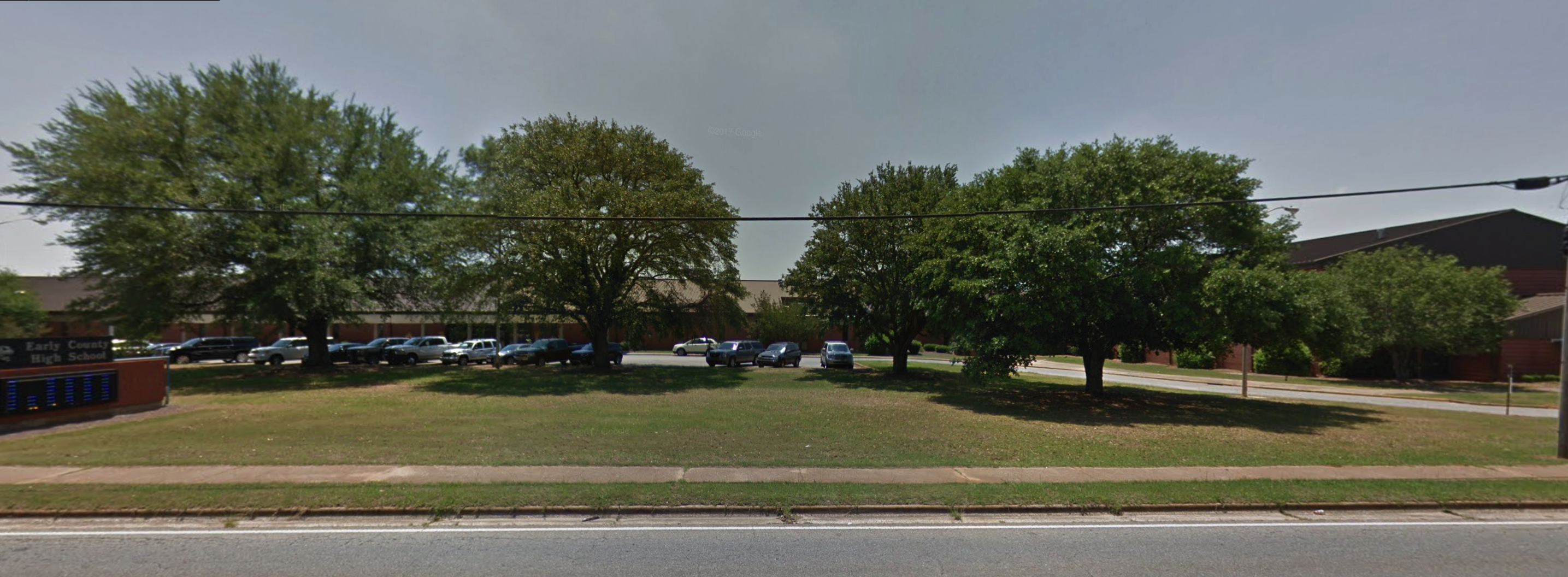
I hope to never return to the scene of the crimes. Thanks to Google Earth, I can sit here and look at the building I spent four years in forty years ago, and wonder if it’s the same building. I truly cannot remember. It’s in the same place, but there’s nothing there that signals to me this is the same structure. It might be. It might not be. But other than being referenced here, it doesn’t really matter, does it? It was where I was from the middle to the tardy seventies, and unlike some of the people who were there with me, I never went back for any reason. There was no reason. There could be none. High School was just a different building in a different place than the other two schools. The bricks were different in they were simply laid somewhere else than other bricks, and the very same thing might have been said about the people who worked there and those forced to attend.
There was a period of time in our lives where the question, “When did you graduate?” was de rigueur when meeting someone new. But then it became less and less relevant, or maybe we all just realized it never was. There was the first job, and then another after that event, and then another, and suddenly someone was calling and talking about a ten year reunion and then there was another job, and another, and failed marriage or three, and then there was talk about thirty-five years having slipped away and finally forty. It’s hard to imagine getting all forty classes of former inmates together at the same time, and even stranger to consider that every fourth class wouldn’t have served time with anyone from five classes up or down the scale. The system that put us all in the same place, at the same time, gave us unlimited access to the same people for twelve years of our lives, but at the same time, limited us in who we would know afterwards. Not that it matters, one way or another, mind you, I just thought it strange.
I used to walk to school, mostly, and I’d short cut through the cemetery to school, and smoke pot there. The cemetery was closed at that time of day and there was no one else, alive, but me. I knew people buried there, and my grandmother is buried there right now. There’s very likely people I went to high school with, buried under a granite slab, having never reached escape velocity in life, they won’t achieve freedom in death. The odds, remarkably, were exactly the same living or dead, but they never realized it, or cared.
Many a morning, early, I would stand at the fence in the back of the cemetery and wonder why. I wondered if it would really ever end, and I knew from reading the tombstones that it end, everything ended, always, for everyone, everywhere, and no one ever got out alive. The seething and the simple, the angry and the dull, the hopeful and the lost, all were packed into the same building, and one day, most would wind up on the other side of that fence. The trip would be short, unremarkable, and mostly forgotten, by those lining up to get in next.
There’s a sense of reverence, a feeling of quiet respect for the dead, a feeling I lost a long time ago, many years since I last took a short cut through the graveyard, and made my way to another form of the same idea of putting all the dying in the same building. Some people still have it, some demand it of others, and as a culture we still want there to be some dignity or meaning after the body ceases to function. And some still have some sort of feelings of happy nostalgia when they think of their High School years, too.
This is all I have left for that time, those years, and it’s all there will ever be. I’ll never go back, never want to, and I’ll never be buried in the cemetery on the other side of that fence. Fifty years will have passed, in a decade, and by that time, me, and a few survivors will bat around invitations like a cat knocking around a beer cap on the floor. For as much the same reasons, and with the same sense of purpose, I imagine.
Take Care,
Mike

